Ephesus: An Ancient City That’s Still Wild
Ever wonder what it was like to really live in a place where old stones practically whisper secrets? Where smart ideas, buying stuff, and just daily life mixed on streets built like, a million years ago? Welcome to Ephesus Ancient City. It’s not just old; it’s screaming with history. A UNESCO World Heritage site with a truckload of tales.
Seriously, this isn’t just busted buildings. Ephesus was a HUGE old port city. A real junction where different big-shot empires and cultures left their permanent marks. I mean, Persians, Romans, Byzantines, Macedonians—they all settled here at some point. And you can see it.
Ephesus: Brains, Brushes, and Breakthroughs
Back then, Ephesus wasn’t just about making cash with trade. It buzzed with brilliant people. The city was a major hub for deep thinking, cool art, and even early science. For example, the philosopher Heraclitus once watched the Meander River, right here, and figured out that “everything flows, and nothing stands still.” Because water never flows the same way twice. A powerful lesson about constant change, still true today.
So, this rich environment for thought helped Ephesus boom. Culturally and financially. Its peak? Around the 6th century BC to the 2nd century AD.
Awesome Buildings and Daily Habits
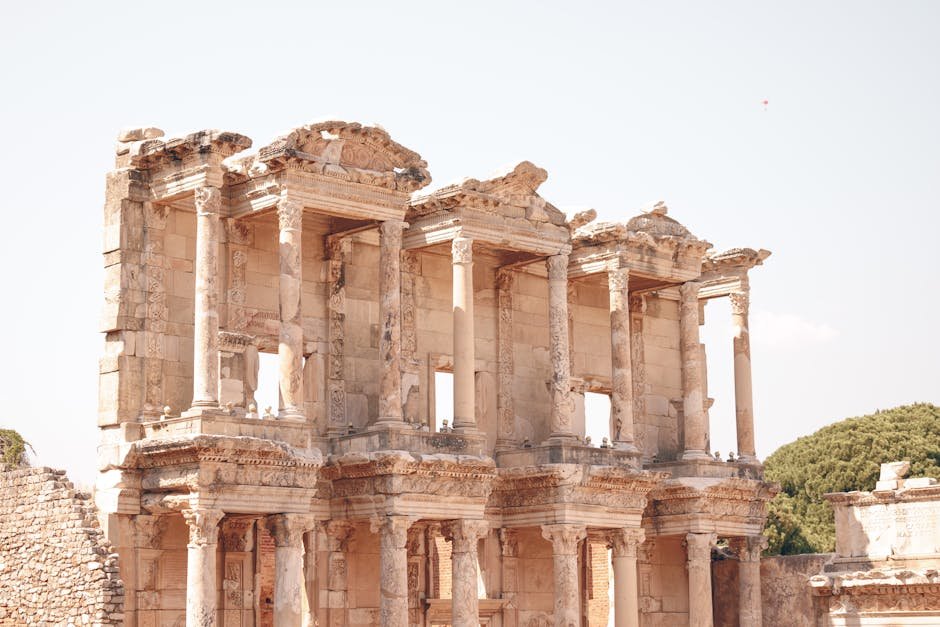
Get ready to be impressed. Ephesus shows off key stuff like the Library of Celsus, the Temple of Hadrian, the Grand Theater, and those fancy Terrace Houses. These aren’t just good-looking structures. They show off real smart Roman engineering. And they give you a genuine peek into old daily life.
The Library of Celsus, for example, was more than just a library. It was Senator Celsus’s big tomb, put up around 110 AD. Complete with statues for wisdom, guts, good sense, and smarts. And get this: It ran almost like an ancient university, its shelves packed with gifted books. Just past it, you’ll find the Mazaeus and Mithridates Gate. Pretty cool. Two freed slaves paid for it, dedicating it to Emperor Augustus.
And another thing: Up in the swanky “Terrace Houses,” you’ll find multi-story, luxury homes. Think colorful floor mosaics, marble walls, even central heating. Posh. Imagine throwing a dinner party there, with mythological art all around you. Total ancient VIP living.
Hanging Out in Public
Yeah, social life was a big deal in Ephesus, for sure. Public spots like the baths (hamamlar), latrines, and the Agora weren’t just functional. They were bustling places for folks, for trading, and for deep discussions.
The Commercial Agora was the absolute center of business. Harbor Street connected it, where goods poured in from far away. But even the less glamorous spots, like the public toilets, were social spots. Seriously. Citizens gathered there, talked news, maybe even gossiped a bit. Wild to think even the rich people from the Terrace Houses would hit the latrines just to chat and stay clued in on what everyone else was thinking.
And for something completely different, the Gymnasium, located above the Grand Theater, was for exercise and brains. Shows the Ephesians totally got that mind and body were linked.
Ephesus and Early Christianity
This city is super important in early Christianity. The Church of Mary especially. One of the first churches for the Virgin Mary. Right here, in 431 AD, a super important council happened. Lasting three months. It really shaped the main ideas of Christianity, even Jesus’s divine nature. Many folks believe Mary and John came to Ephesus. They spread the religion far and wide from this very spot.
The Hercules Gate: The OG Pedestrian Street
But one of the most distinctive features? The Hercules Gate. This huge entrance wasn’t just impressive. It did a vital job: it split the city’s social zones below from its government buildings above. The street got narrow with stairs. No carts. That’s right – the Hercules Gate acted like one of the first pedestrian-only streets anywhere! Now, only the columns are left, proudly showing off Hercules carving, wrapped in his Nemean lion skin. A symbol of his super strength after his legendary twelve tasks.
Old Stories and Juicy Legends
Ephesus is jam-packed with old stories. The founding legend says Androclus, a guy from Ionia, got advice from an oracle. Build his city where a fish and a boar led him. He chased a boar. Right here. Scenes from that hunt are on the reliefs at the Temple of Hadrian.
And then there’s the wild, sad story of Arsinoe IV, Cleopatra’s sister. She messed with Cleopatra. So Arsinoe got sent into exile in Ephesus. Her octopus-shaped tomb, kind of like the famous Pharos Lighthouse, is thought to hold her bones. Research points to the bones of a young teen. Lines up with the theory that Cleopatra had her sister offed here. Total family drama.
Walking the streets of Ephesus feels like digging through layers of time. Every single step. You’ll spend hours. Six, probably. Just soaking it all in. You better wear comfy shoes; this place is huge and you’ll be on your feet for ages.
Quick Answers
Why is Ephesus a UNESCO World Heritage site?
Ephesus got recognized because it’s so important historically and archaeologically. A big shipping hub and a cultural melting pot shaped by tons of empires. Plus, its huge part in art, science, and early Christianity. Its preserved buildings really show us what ancient life looked like.
Why is the Virgin Mary a big deal in Ephesus?
Ephesus has the very first church dedicated to the Virgin Mary. And in 431 AD, it hosted a really important meeting, the Council of Ephesus, which helped lock down Christian beliefs. Lots of people
also believe Mary and the Apostle John came here. A key spot for spreading Christianity way back then.
What’s up with the Hercules Gate being a pedestrian street?
The Hercules Gate had stairs that made the road narrow. Effectively, it cut off wheeled traffic. This clever design split the city’s social and political zones. Basically the first pedestrian-only street in ancient times.