Your Tech’s Ugly Secret: Cobalt in Congo
Year 2025. Picture the Democratic Republic of Congo. World forgets the DRC. You can’t live without it though. The air itself feels thick with metallic dust here. That sound? Easily thousands of hands digging into the earth. Not history. Just a modern gold rush. But they’re not after gold. They’re seeking a grayish-blue element: cobalt. What powers your smartphone, your laptop, making them rechargeable? Lithium-ion batteries. And cobalt is their very heart. So, how do we finally get real about Ethical Cobalt Sourcing?
Why Cobalt Matters So Much (And Why We Can’t Quit It Yet)
Cobalt isn’t just some rock. It’s what makes a lithium-ion battery’s cathode – the positive end, you know? This tiny powerhouse keeps your device from overheating. Also stretches its lifespan. And loads of power. Without it? No smartphone.
Everyone wants this stuff. Constantly. By the mid-2020s, worldwide cobalt demand hit over 200,000 metric tons a year. Experts say. Double by 2030. Think about that.
Congo’s Cobalt: All Ours, But What a Mess
So, where does all this come from? One country. The Democratic Republic of Congo. Reports from the U.S. Geological Survey confirm the DRC alone accounts for more than 70% of global cobalt production. It’s a near-monopoly. Even tighter than Saudi Arabia’s hold on oil.
Theoretically, this should make Congo one of the richest countries on Earth. Right? The reality? Miles away. The problem starts with how this “blue gold” gets dug up. Mining in Congo largely splits into two worlds. On one side, you’ve got industrial, official mines. Big companies. Glencore. Heavy machinery everywhere.
Then there’s the other side. A chaotic, almost totally unregulated world. This is artisanal mining. Or for locals, the “creuseurs” – the diggers. “Artisanal” sounds innocent, almost quaint, doesn’t it? Like skilled craftspeople. The truth is the direct opposite. Artisanal mining zones? Hellish fragments: no safety gear, workers waist-deep in mud, narrow tunnels carved out with primitive picks, shovels. Sometimes bare hands.
In southeastern Congo’s copper belt, over 200,000 people officially try to survive this way. Unofficial numbers suggest far more. This artisanal sector? Makes up an estimated 15% to 30% of Congo’s total cobalt exports. And another thing: right there, the dirtiest secret of the supply chain comes into full, tragic view: child labor.
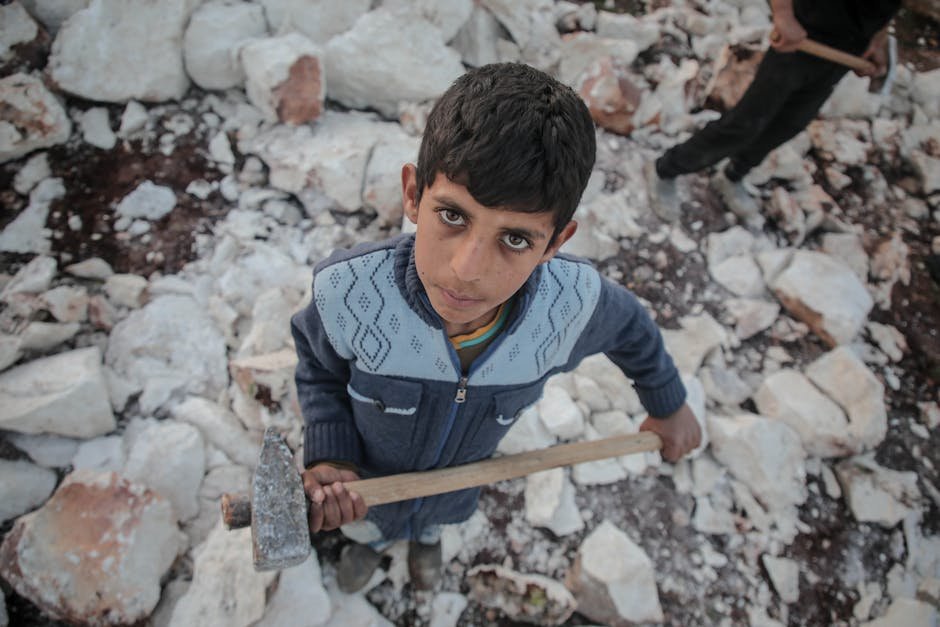
Organizations like UNICEF have documented this for years. In the mid-2010s, UNICEF estimated around 40,000 children worked just in the southern Congo mines. Fifteen years later. Not much change. Kids. Some as young as seven or eight, or even ten. Should be in school or playing. Instead, they haul 25-kilo sacks of cobalt. Less than a dollar a day. Some squeeze into narrow, unsupported tunnels. Dug by bigger miners. Breathing in toxic dust. Always at risk of collapse. That dust, by the way, causes a deadly condition known as hard metal lung disease.
Amnesty International’s “This is What We Die For” report in 2016 shocked the globe. First time this system was clearly connected to global brands. The report relayed children’s stories. Up at 6 AM, work ’til 6 PM. Empty bellies, tired bodies. Just to live. For rich companies. Cobalt isn’t just a mineral. It’s a paradox: the invisible foundation of our smartphones, those prosperity symbols. Yet also the name for systematic exploitation, poisoning, and child labor at the supply chain’s darkest end.
How the Dirty Cobalt Gets Cleaned Up (The Supply Chain Scam)
How does cobalt from those muddy tunnels make it to the shiny storefronts in California? It’s a deliberately obscured path.
Rewind to 2008. Kinshasa, the DRC’s capital. Amidst a global financial crisis, President Joseph Kabila inked one of history’s largest deals. With Chinese state-owned companies. The “Sicomines agreement.” China got mining rights for Congo’s copper and cobalt. In exchange, promised $6 billion in infrastructure – roads, hospitals, dams. This deal cemented China’s irreversible dominance in Congo’s mining sector. But that was just the official story. On the ground in Lualaba and Haut-Katanga provinces, a much more intricate system already existed. Worked like layers in a pyramid.
At the base? Hundreds of thousands of diggers – the artisanal miners. These folks aren’t company employees. They’re part of a massive population that hasn’t seen any share of Congo’s wealth. Impoverished by civil wars and corruption. The DRC is one of the world’s poorest nations by GDP per capita. For these people, digging isn’t a choice; it’s the only way to survive. They tunnel, wash soil, and bring up every piece of cobalt they find. Just to sell it.
On the surface, the pyramid’s second layer emerges: the negociants, or traders. Small- to medium-scale buyers. Motor around the mining zones, cash in hand. Mostly Congolese, sometimes Lebanese or Indian. These traders buy the sacks of cobalt the diggers extract all day. The diggers are entirely dependent on these negociants. They set the day’s price. Right at the tunnel entrance. Tiny fraction of the global market price. Always. These traders maximize their own profits by selling what they collect to larger depots.
Next up, the third layer. The linchpin. Large buying depots, known as comptoirs. From the mid-2000s, these depots multiplied, especially in mining cities like Kolwezi. China, mostly. Among them, one company became a central player in the global cobalt supply chain: Zhejiang Huayou Cobalt.
Huayou Cobalt. Huge Chinese company. Saw promise in Congo early 2000s. Entered the market through a subsidiary called Congo Dongfang Mining, or CDM. Huayou Cobalt’s rise was built on a brilliant, yet dark, business model. They didn’t merely buy “clean,” official cobalt from large industrial mines. They also established massive depots to buy huge quantities of unregistered cobalt from artisanal mines. Via hundreds of traders in and around Kolwezi.
This strategy gave them immense market power. When industrial mines struggled, Huayou Cobalt could make up the deficit with artisanal sources. They controlled prices. Most critically, they created a mixing mechanism. Cobalt from artisanal mines – potentially extracted by child labor – was simply dumped into the same heap as official cobalt from industrial mines in these depots. Once mixed? Telling the origin apart became impossible. This is the mineral version of money laundering.
Huayou Cobalt would partially process this mixed cobalt at its facilities in Congo. Then ship the raw material to China. Often via ports like Durban in South Africa or Dar es Salaam in Tanzania. In China, it would get to the world’s largest cobalt refineries. Where it got turned into battery-grade cobalt sulfate and cobalt oxide. Ready for sale to lithium-ion battery manufacturers. By the mid-2010s, Huayou Cobalt controlled a huge chunk of the world’s total cobalt refining capacity.
So, this whole pyramid of desperation. Hundreds of thousands of diggers. Their exploiters? Local traders. Then huge companies like Huayou Cobalt, mixing it all in. That’s the system powering our smartphones. Big profits built on crushing poverty. And everybody blurred lines.
Kolwezi at 5 AM. Before sunrise. Thousands of diggers. Swarming those mine sites. Some enter legally grey areas next to big industrial pits. Others go into official artisanal zones. Safety standards? Often non-existent. The primitive and brutal process kicks off in the mud.
First, Digging. Children and adults descend into narrow, unsupported tunnels, some up to 30 meters deep. No air, no light, just small headlamps. Tunnels can, and often do, collapse. On the surface, often women and smaller children carry the excavated soil to a nearby river or puddle.
Second, Washing and Sorting. Women wash sacks full of ore in shallow water to separate the dirt. Leaving the heavier metallic ores – copper and cobalt. Children then sort bright blue cobalt pieces from these washed piles. With their bare hands. They breathe in cobalt-laden dust causing irreversible lung scarring.
Third, Selling to Traders. End of the day, sacks are filled. A lucky digger might find a few kilos of cobalt. They take these sacks to the traders waiting at the mine’s edge. Price is set right then. Diggers have zero bargaining power. The money they receive determines if they eat that night. This is the first and most critical informal link in the chain. No papers. No idea who dug what. Or if it was a kid or grown-up. Just cash changing hands.
Fourth, Trader Consolidation and Mixing. Traders, on their motorcycles, take this artisanal cobalt to large depots. On the outskirts of Kolwezi. Biggest of these? Belong to giants like Congo Dongfang Mining. Huayou Cobalt’s subsidiary. Amnesty’s 2016 report revealed Huayou Cobalt bought an estimated 40% of Congo’s artisanal cobalt at the time. It’s in these depots where the most crucial trick occurs: mixing.
That undocumented cobalt collected by children is dumped into the same colossal heap as the clean, official cobalt. Arriving by truck from industrial mines. Once commingled? Its origin is physically impossible to distinguish. This is the mineral equivalent of money laundering. Raw material, ambiguous in origin and potentially tainted by child labor, instantaneously transforms into a legitimate supply chain product.
Fifth, Shipment to China and Refinement. Companies like Huayou Cobalt load this mixed cobalt from Congo onto ships. Typically via ports like Durban in South Africa or Dar es Salaam in Tanzania. Bound for China. In China, this raw ore gets to the world’s most advanced refineries. Here, cobalt is transformed into high-purity, battery-grade chemicals. Such as cobalt sulfate and cobalt oxide.
Sixth, Battery Producers. This refined, pure cobalt is now an intermediary product. Sold to companies that manufacture cathodes. The critical part of a battery. This market also has major players: China’s Amperex Technology (CATL), South Korea’s LG Chem, and Samsung SDI. These companies buy tons of processed cobalt from places like Huayou Cobalt.
Seventh and finally, The Brands. Cathode producers use these components to make lithium-ion batteries. Then sell them to the big brands we all know: Apple, Samsung, Microsoft, Tesla, Volkswagen, Huawei. And others. For most of the 2010s, these tech and automotive giants tended to lag in supply chain oversight. They passed the buck to battery producers, who passed it to cathode producers, who passed it to refiners like Huayou Cobalt. Huayou Cobalt, while admitting to buying from artisanal mines, cited the complexity of thoroughly auditing the depths of their supply chain. It was a perfect system built on “plausible deniability.” Everyone claimed responsibility for just one link in the chain. And nobody wanted to look into the muddy tunnel at the very bottom.
Simple mechanism: Exploit desperate people. Mix the evidence. Refine it. Sell to the richest.
‘Zero Tolerance’ Claims? Kids Kept Digging. They Just Hid Them Better
January 19, 2016. London. Amnesty International and Afrewatch unveiled two years of rigorous research. The report’s title, “This is What We Die For.” Quoted a Congolese miner. It was a watershed moment. It didn’t just expose tragedy. For the first time, it clearly connected the invisible chain from those muddy mining sites directly to the shiny offices in Silicon Valley. Naming names.
The report confirmed the mechanism described earlier. Researchers spoke with seven-year-old children in Kolwezi’s artisanal mines. They documented how the cobalt these children collected was bought by Congo Dongfang Mining (CDM), Huayou Cobalt’s subsidiary. Then, they revealed how Huayou Cobalt refined this cobalt in China. And sold it to three major battery component manufacturers: Amperex, Samsung SDI, and LG Chem. The report then listed these battery producers’ clients. That list included the world’s biggest tech and automotive names: Apple, Samsung, Sony, Microsoft, Dell, HP, Huawei, Lenovo, Volkswagen. And the fast-rising Tesla. This wasn’t an accusation. It was a mapping based on supply chain data.
Amnesty contacted those 16 giant corporations. The responses? A wall of global indifference. Most companies claimed they couldn’t trace to the bottom of the cobalt supply chain. Didn’t know if they had ties to artisanal mines in Congo. This was a perfect admission of the plausible deniability mechanism. Some issued standard press releases about “zero tolerance” for child labor. But Amnesty’s conclusion was clear: these companies hadn’t done even basic checks to understand if they were profiting from human rights abuses in Congo.
The tremor from the 2016 report spurred media action. In 2017, investigative journalist Alex Crawford and her Sky News team went to Congo. Footage. Cold text into a stark, living reality. Crawford’s team filmed children descending into dangerous tunnels. Mothers washing cobalt in toxic rivers. Weighed down by heavy sacks. These images landed on millions of screens worldwide – ironically, devices often powered by the very tragedy they were witnessing.
Around the same time, Siddharth Kara, a researcher and author specializing in modern slavery, deepened years of fieldwork. Kara’s findings. Just confirmed it. This wasn’t an anomaly. It was the inherent system. Kara described this system as one of the most brutal and dangerous forms of modern slavery.
Pressure grew. Companies had to do something. Apple, called out in that 2016 report, made a big show. 2017. They published their cobalt refiner list. First tech company to do it. Pushed refiners, even Huayou Cobalt, to get audited. Apple even made Huayou Cobalt stop buying from artisanal mines until checks finished. A huge step, really. For a big brand to jump in down there.
By 2017. California. PR storm from Amnesty’s report. Tech giants went from defending themselves to acting. Apple, of course, was front and center. Cobalt got its own section in their reports. Said they’d force refiners to get audited. Even pushed Huayou Cobalt to stop (or just audit) artisanal buys. Fantastic on paper. Industry groups, like the Responsible Minerals Initiative? Beefed up. Companies swore they’d work with Congo’s government, make “clean” artisanal sites. Every press release? Screamed “Zero Tolerance!”
But this was only the shiny surface of truth. An illusion. Because on the ground in Kolwezi, the system resisted change. Journalists and researchers continued to scratch beneath these corporate promises. Follow-up investigations in 2018 by The Washington Post and other media outlets revealed child labor hadn’t ended. It had just become more hidden. Traders now used more clandestine routes at night to get child-mined cobalt into depots. While giants like Huayou Cobalt outwardly increased their official purchases, the exploitation of diggers at the very bottom of the supply chain remained largely untouched.
Siddharth Kara, the modern slavery expert, documented this period across years of fieldwork. Kara’s research. Just PR stunts. Kara, using hidden cameras, recorded how children were quickly whisked away from mining sites. When auditors arrived at large refiners. Once the auditors left, the children returned. Because the system depended on their cheap, or free, labor.
Lawsuits! Big Tech in Court. They Got Away, But Things Still Changed
December 14, 2019. Washington. The zero-tolerance illusion shattered that day. International Rights Advocates (IRA), a human rights organization, did something unprecedented. They filed a lawsuit against five of the world’s richest companies. On behalf of victims. This wasn’t another report or media exposé. This was concrete action.
The lawsuit filing was difficult to read. Loaded with tragic specifics. The plaintiffs were 14 children and their families from Congo. Who had either died or been terribly injured in the mines. The suit accused these companies of knowingly participating in and profiting from a forced labor network under U.S. law. The filing transformed anonymous statistics into real stories. There was John Doe 1, a small child forced to work in a cobalt mine. Paralyzed after a tunnel collapse. Another John Doe died in a tunnel collapse. Yet another lost his balance carrying a heavy sack, fell into a mining pit. Broke his neck.
This was the scandal. The lawsuit claimed these companies weren’t just ignorant or negligent. It alleged these giants specifically knew the cobalt in their supply chains was extracted by child labor. It argued that despite their capacity and knowledge to audit their supply chains, they allowed this exploitation to continue. Because cheaper cobalt directly boosted their profit margins. The lawsuit identified Huayou Cobalt and other suppliers as leaders of this forced labor enterprise. And positioned the tech giants as the buyers and financiers. Nowhere left to hide. A legal link was attempted between a paralyzed child in Congo and decisions made in a gleaming California office. This marked the end of the zero-tolerance illusion.
By 2020 in Washington, the landmark lawsuit filed by International Rights Advocates had pierced the heart of the tech world. Apple, Google, Tesla, Microsoft, and Dell. These five giants, for the first time, faced the family of a child who died in a Congolese tunnel. As defendants in an American courtroom. The reckoning had begun.
The companies’ response was swift and total. As expected. The world’s most expensive legal armies mobilized. Their legal argument was simple, but carried immense weight: “We do not own the mines.” Their defense rested on a bedrock of modern global capitalism: the diffusion of responsibility. They argued, “We don’t operate in Congo. We don’t extract cobalt. We are end-buyers in a complex, multi-layered, global supply chain. What we buy from Huayou Cobalt, LG Chem, or Samsung SDI is a refined, processed intermediary product of indeterminate origin – batteries and components.”
They legally moved to dismiss the case. Claiming no direct link could be established between their corporate actions and the tragedies in Congo. The plaintiffs’ counter-argument was as moral as it was legal. Attorneys used the U.S. Trafficking Victims Protection Reauthorization Act. Asserting these companies not only knew about forced labor at the bottom of their supply chains. But knowingly profited from the system. They argued these companies overlooked, and even indirectly encouraged, this “joint venture” of exploitation. To secure cheaper cobalt. The world held its breath. Waiting for the court to answer a fundamental question: How much responsibility does a global corporation bear for crimes committed at the darkest end of its supply chain?
The decision came on November 2, 2021. U.S. District Court Judge James Boasberg dismissed the lawsuit. In his reasoning, Judge Boasberg acknowledged the tragedies suffered by the plaintiff families. But failed to establish the direct link required by law between the tech giants’ actions and these tragedies. According to the ruling, the companies were merely “market buyers.” In this legal terminology, it couldn’t be proven that the companies directly participated in an enterprise that forced a specific child to work in a specific mine in Congo. This was a devastating blow for the victims. The legal reckoning, at least in the first round, failed. The system had protected its wealthiest actors. Attorneys immediately announced an appeal. Vowing the fight would continue in a higher court.
However, this legal setback did not halt the societal and financial impacts of the scandal. The reckoning progressed in different forms outside the courtrooms. One front was the European Union. In response to such lawsuits and reports, Brussels began drafting its Corporate Sustainability Due Diligence Directive. This legislative proposal legally mandated large corporations (above a certain turnover) to identify, prevent, and report human rights and environmental abuses across their entire supply chains. “We didn’t know” would no longer be a valid defense.
Tech Runs From Cobalt: LFP Batteries, Tesla’s Move, and Market Escape
The second, and perhaps more impactful, reckoning occurred within the market itself. In technology. The cobalt scandal made the “blue gold” such a toxic mineral that engineers began scrambling for ways to eliminate it. A new revolution in battery technology accelerated: LFP batteries, or Lithium Iron Phosphate. The biggest advantage of this battery chemistry? Zero cobalt.
Ironically, one of the defendants in the 2019 lawsuit, Tesla, became a leader in this exodus. Tesla announced it would shift to LFP batteries for all its standard-range vehicles. Partnering with Chinese battery giant CATL. Opting out of cobalt-containing cells. This wasn’t merely an ethical decision. It was also an economic move. Freeing them from cobalt’s price volatility and supply risks. Other automotive giants and tech companies swiftly began to follow this path. This was the reckoning. The legal system might have failed the children in Congo, but the stain of the scandal was so immense that global industry found its solution not in fixing the morality, but in trying to escape the problematic raw material entirely. The reckoning, at least partly, arrived through an unexpected route.
Tesla’s pioneering efforts, rapidly embraced by the entire industry, sparked up the promise of clean technology through LFP batteries. No cobalt, no child labor problem? This was the answer the tech industry wanted to hear. But the reality isn’t that simple.
Poverty & Corruption Remain. So Does Exploitation. It’s Not Just Cobalt
The first lesson learned? The problem was never the cobalt mineral itself. The problem was the system of global capitalism. Built on finding the most vulnerable people. And exploiting them under the most brutal conditions. While LFP batteries offer a solution for standard and mid-range electric vehicles, by 2025, the heart of the high-performance battery market – long-range luxury EVs, laptops, and smartphones – still beats with NMC (Nickel-Manganese-Cobalt) or NCA (Nickel-Cobalt-Aluminum) chemistries.
Cobalt demand hasn’t vanished. It’s merely slowed and shifted. More importantly, the diggers. Those desperately poor artisanal miners in Kolwezi. Haven’t gone anywhere. If the world stopped demanding cobalt, they would be forced to dig for lithium, nickel, or manganese tomorrow. That’s because Congo’s southern copper belt isn’t just rich in cobalt. It’s an area brimming with almost all the transition metals the modern world needs. As long as extreme poverty and corruption, the root causes, persist, so will exploitation.
Is This Just Normal Now? We Know, But We Don’t Fix It
The second lesson was the illusion of corporate responsibility. Initiatives like the Fair Cobalt Alliance or the Responsible Cobalt Initiative. Founded after the 2016 scandal. Sounds good. Their goal? Formalize artisanal mining, create safe sites, and remove child labor from the supply chain. Yet, these efforts remained drops in an ocean. In a system with over 200,000 diggers, these pilot programs only touched a few thousand miners. They were often criticized for little more than enabling companies to say “look, we’re doing something” in their annual sustainability reports.
The real lesson? Legal obligation. Voluntary commitments hadn’t worked. The only thing that did work was the fear generated by that landmark 2019 lawsuit. Companies acted when their legal existence, not just their profitability, felt threatened. This fear across the Atlantic in Brussels turned into concrete policy. The European Union’s Corporate Sustainability Due Diligence Directive was finalized in 2024. This law no longer just tells companies, “Know what’s in your supply chain.” It now says, “You are legally responsible for what’s in your supply chain.” Violations come with massive fines.
But amidst all these lessons, one new, insidious situation is emerging: normalization. When the scandal first broke, everyone was shocked. We read the reports, watched the footage. Got angry. Years have passed. Now, we just know. We live with the knowledge that our smartphones are connected to blood and mud in Congo. This information is no longer a shock factor. It’s become disturbing background noise. This normalization risks human rights abuses becoming an acceptable cost of modern life. Factored into the price tag. Tragedy becomes a mere statistic. And statistics don’t save children in tunnels.
So, here we are in 2025, wherever you are. That device in your hand. That gleaming piece of glass and metal. It’s a miracle. A product of humanity’s collective brilliance. It connects us instantly to information worldwide. To loved ones. And perhaps, to me right now. But what lies behind that bright screen? We now know. This story was never just about a mineral. It wasn’t a tech problem. It wasn’t a supply chain logistics issue. From the start, this was a moral problem. A problem of will. It was the story of a silent decision about who would pay the price for what the modern world calls progress. Pick up your device again. Feel its weight. That weight isn’t just lithium, silicon, and cobalt. It’s the weight of a lost generation in Congo. Of poisoned bodies in forgotten tunnels. And of childhoods that were never lived.
Frequently Asked Questions
Q: Why do our gadgets NEED cobalt?
A: Cobalt is key for rechargeable batteries. Specifically, in cathodes of lithium-ion batteries. Stops overheating. Makes them last longer. And pack a punch in tiny devices. Think phones, electric vehicles. Modern living.
Q: So, why is Congo the center of all this?
A: DRC has over 70% of the world’s cobalt. Most comes from it. But deep poverty, messed up supply chains mean it’s dug out through brutal artisanal mining. Dangerous. Child labor. Total exploitation.
Q: Did the lawsuits and public outrage fix anything?
A: Nah, not really. Lawsuits (like the 2019 one!) and public yelling DID force companies to act. This jumpstarted the move to cobalt-free batteries, like LFPs. But the core problems like deep poverty and corruption in the DRC? Still there. Exploitation just hides now. And it’s not about the mineral, it’s about the rotten system. Worried this mess just becomes “normal.”