Wild Rides & Weird Science: California’s Animal Rules
You ever wonder how far people will go for ‘science’? Back in the 1930s, this American psychologist, Winthrop Kellogg, and his wife Luella — new parents themselves — they really went for it. Not just thinking. They did this experiment. And if someone pulled that stunt today? Oh man. Major red flags for California ethical animal care standards.
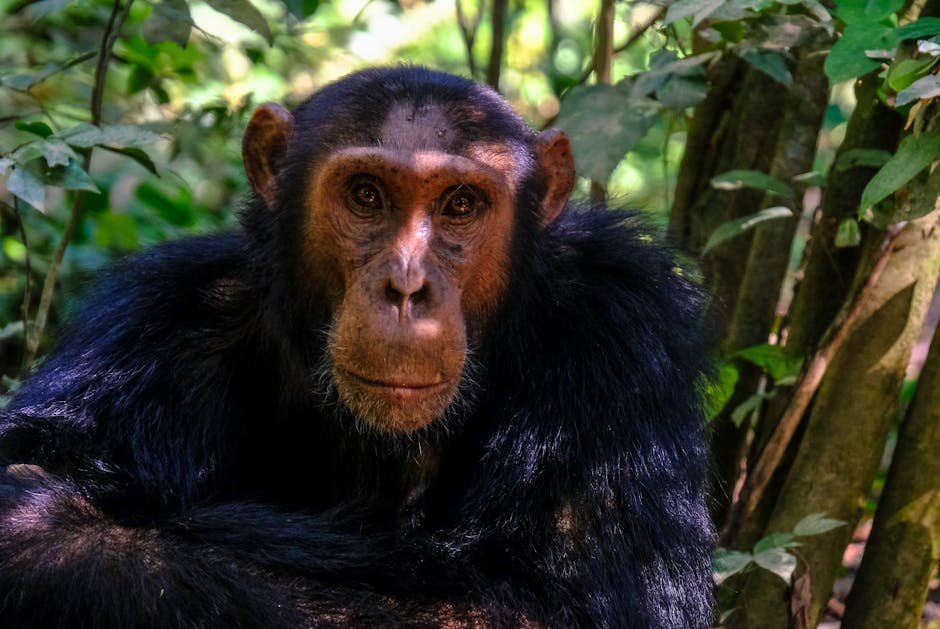
Here’s the wild idea. Grab a wild animal, basically a chimp, right? And raise it like your own kid. Your actual human baby, right alongside it. They wanted to know if a chimp could turn ‘human.’ And what would happen to their son? Today’s animal welfare folks? Yeah, they’d shut that down. Instantaneously.
What they found? Chimps learn physical stuff FAST.
So the Kelloggs got their animal, Gua. She was a 7.5-month-old female chimpanzee from a Yale University place in Florida. Their son, Donald, was 10 months. Just a few months apart, perfect for raising ‘twins.’ Their Florida rental? Basically a weird science house.
Day one, Gua was treated like a twin sister. Clothes. High chair. Spoon and cup, just like Donald. Even potty training. Can you even imagine the notes they took? Twelve hours every single day, just endless tests. Reflexes, seeing depth, how they moved, their memory. All of it.
And Gua? Man, she was a rockstar. Chimps just grow up faster. She totally showed it. Beat Donald at crawling, walking, running, grabbing stuff. Opening doors? Yep, her before him. Spoon and cup? Perfect. Donald was still dropping food everywhere. She even copied actions; saw Luella with a toy phone, picked it up, held it to her ear. By her first birthday, this chimp answered to almost 95 words and simple sentences. Crazy, right?
But genes? They still mattered. A lot.
For all Gua’s amazing human-like stuff, some big differences popped up. Donald knew people by their faces. Gua? She went by clothes and how they smelled. Put on something different? She’d be suspicious. And then, this huge problem: talking.
Gua, no matter how hard anyone tried — her, the Kelloggs, you name it — she couldn’t speak human words. Babbing. Crying. Chimp noises. But real human words? Nope. Never. Our brains, they’ve got this special setup for talking. Chimps just don’t have it like that. Meanwhile, Donald, he started saying ‘mama’ and ‘dada.’ This was a genetic dead end, a massive headache for an experiment that was supposed to last five whole years.
Gua eventually just… stopped getting smarter. She was great at copying stuff, and moving her body? Awesome. But tougher problems, the ones needing real thinking, like moving a chair to get a toy? Hard. Donald, with a little help, got it. Gua often just tried things over and over. Chimps, turns out, they peak fast on their bodies and early brains. Then it kinda stops. Humans, though? We’re slower, but we keep going for ages.
This experiment? It totally changed how we think about ethics.
This whole thing, even if they were just curious scientists, would never fly today. Not with our strict animal welfare rules. The difference between just watching and actually messing things up? It got super fuzzy. And people started worrying big time. Like, what about the minds of these two? An animal ripped from its own kind. A kid stuck in a totally weird house. Yeah, big concerns.
Then Donald started acting like a chimp. Uh oh.
Then things got really out there. And it was kinda creepy. Gua wasn’t the only one changing, you know? Donald, the human kid, started copying Gua. Walking? Nah. He’d crawl like she did. Hungry? He’d make those chimp ‘hoo-hoo’ sounds instead of baby words. Jeez.
Donald’s speech? It didn’t get better. It got worse. He was learning chimp noises and ways of acting. Can you imagine the freaking out? These are scientists, and parents! And playtime? It wasn’t fun anymore. It was actually dangerous. Because Gua got bigger. So strong! What if she just shoved Donald too hard? He could get seriously hurt. The whole thing was just too risky. Period.
So, they had to stop. And things ended badly. Real bad.
Experiment over! Nine months. That’s it. Four years early. Total bust. Officially, they said Gua had just copied all she could, and Donald was messed up talking-wise. The Kelloggs really did love Gua though, like their own kid. But the problems they faced? Morally and just practically? No denying it. They couldn’t.
The goodbyes? Heartbreak city. Gua slowly got put back with other chimps. But imagine going back to your species after being human your whole life. She just couldn’t make it work. Died of pneumonia at three. Only two years after the whole thing ended. Donald, he got his speech back fine. Became a doctor. Legitimately successful. But get this: he killed himself at 43. Suicide. Totally separate from the study, they say. But man, that’s a seriously dark ending to a story already full of ‘what ifs’ and moral messes.
This crazy, messed-up experiment? It showed us some huge truths, though. Animals can learn a ton, absolutely. But ultimately, their genes set limits. And guess what? Humans, especially when we’re little, are super flexible. Totally shaped by where we grow up. Because of lessons like this, California ethical animal care has to respect what each species needs. You can’t just drop an animal into a human world and think it’ll all be okay. It just ain’t how it goes. Not how nature operates.
Frequently Asked Questions
Q: So, how long did that Kellogg experiment really go on?
A: Five years, that was the plan. But nope. They stopped it after just nine months. Ethics and safety issues.
Q: What was the main reason they pulled the plug early?
A: Gua had basically hit her limit trying to be human, especially with language. And the really scary part? Donald’s speech got messed up. He was copying chimp sounds.
Q: Whatever happened to Gua once it was all over?
A: She went back to the primate center. But trying to get used to being a chimp again? Brutal. Died of pneumonia at three. Only two years after the experiment. Sad stuff.