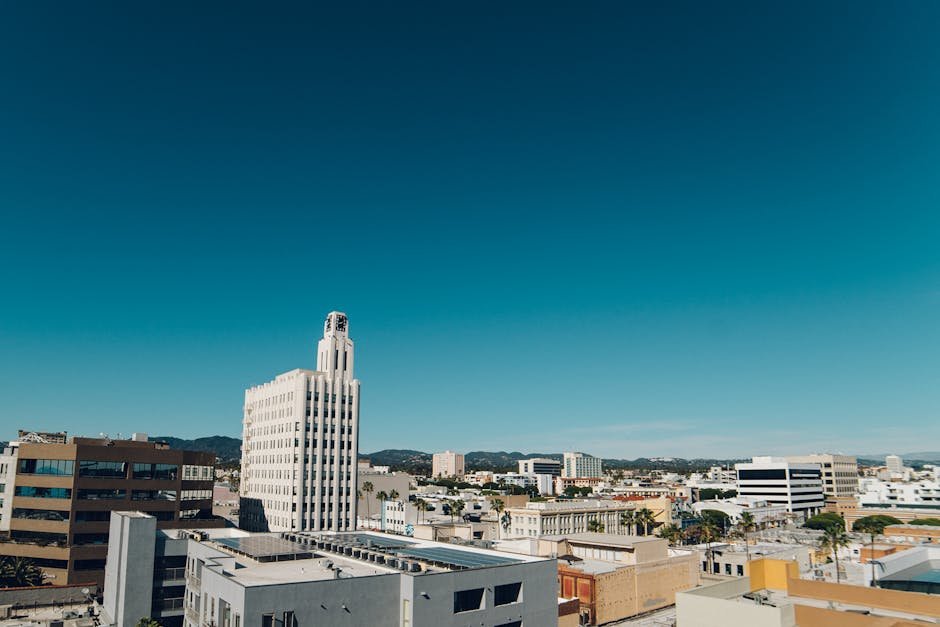
The RAND Corporation: California’s Brain Trust That Shaped the World from Santa Monica
Ever wonder how California got so smart? Not just the movies or apps, but real big ideas? Right here in Santa Monica, a little group called the RAND Corporation California started. After WWII. Not for movies, for brains. Kept America’s smarts going strong. Fast. It became a think tank, practically inventing bits of the internet. And planning nuclear war stuff. Wild. Different kind of California dreamin’. For real.
California as an Innovation Hub
So, 1945. Bomb dropped. War over. But General Henry Arnold, a smart leader, saw fresh trouble coming. Not just the Commies. Losing those big brains from the Manhattan Project. All those super-smart folks. Scattering everywhere. Soviets could boss their scientists around. America? Needed a new game plan.
So, Arnold called up Frank Collbohm. From Douglas Aircraft. They met up. Hamilton Air Force Base. Project RAND created. Name? Easy: Research and Development. Ten million dollars. From the Army Air Forces. The plan? Keep smart people working national security. But civilian. Away from army rules. Smart thinking. A totally new thing.
Started with Douglas Aircraft. But LeMay, the guy behind Japan’s firebombing, honed its focus fast. By ’46, RAND’s role was plain as day: tell the Air Force about “scientific study and research on air warfare.” And proving its value? Happened fast. A month after defining its purpose, RAND put out a report. Predicted multi-stage rockets, fuels, future uses for satellites. Weather, global talk, spying, propaganda. All of it. Eleven years before Sputnik hit. Mind-blowing. What a prediction, honestly.
By ’48, Douglas Aircraft backed off. Worried about conflicts with their own defense work. Good call, separating. On May 14, 1948, the RAND Corporation California officially launched. Independent. Non-profit. Right here. Its goal? Wider now: “to further and promote scientific, educational, and charitable objectives for the public welfare and security of the United States.” Not just a weapons lab. Not anymore. Fast, it turned into the birthplace of “systems analysis.” That’s a super smart way to ask “what should we build next?” instead of just “what can we build today?” Real ‘think tank’ stuff.
Pioneering Internet Technology from California
So. The internet, right? You can thank some RAND guys. After the Cuban Missile Crisis in ’62, a scary thought hit Santa Monica: could our whole command, control, and talk-to-each-other setup survive a nuke? Our phone network was a bad spot. First bomb hits Washington or Omaha. System gone. No hitting back.
In walks Paul Baran. Smart engineer from Poland. From RAND. He cooked up something amazing: a distributed network. No central point. Nothing central to blow up. His 1964 report, 11 volumes, “On Distributed Communications,” spelled it all out. Every point equal. Lots of paths. Say a bomb hits part of the net? Data just finds another way. Through other parts. Absolutely genius.
The real magic? How information zipped around. Baran suggested breaking messages into tiny “message blocks.” Digital ones. We call them packets today. Each got an address, a number. They’d fly through the network. Saved, sent along by each connection. Finding the best route. Unbelievably tough. That’s what it meant. AT&T? Laughed. Too stuck on old analog phone lines. But ARPA, the Advanced Research Projects Agency, got it. That was the technical foundation for ARPANET. The original internet. All of it? From a Santa Monica office. Near the beach. Boom.
Shifting Focus of California Institutions
The Cold War was a thing, sure. But RAND’s own innards, plus external shocks, started pushing it to change. A total gut check, basically. The huge mess from the Pentagon Papers leak (we’ll hit that soon) totally sunk trust with the Air Force, their biggest customer. Contracts? Dried up. Identity crisis time for RAND.
But change was brewing already. Early as ’66, folks at RAND said, “Hey, let’s do more than military stuff.” Started looking at social welfare. Donald Rice took over in ’72. That shift? Went into hyperdrive. Guess what? All that “systems analysis” smarts totally shifted. Not for nukes. It was for housing, for poverty, health, schools. How busy cities even functioned.
Wanna hear about their civilian work? The New York City RAND Institute in ’69. They hit everything. Welfare to public safety. Actually changed how NYC’s Fire Department did things. Used computers. Figured out where to send firefighters. And another thing: their dispatch plans. Big deal stuff. Also, the RAND Health Insurance Experiment. Started ’74. Biggest social policy experiment. Ever. In U.S. history. What’d they find? Splitting costs seriously cut healthcare visits. And for most people, fewer visits didn’t make them sicker. This formed the base for today’s managed care. And those annoying high-deductible health plans. Yeah.
And they went worldwide. Helped the Dutch government a lot in the 70s on flood protection. Huge storm barrier, 10-kilometers long, came from that research. To keep smart ideas coming: RAND started its own grad school in ’70. Taught future policy nerds how theory actually works in reality. That ability to change? Kept them important. Totally a California thing.
Influence on Global Policy from California
From Santa Monica, these RAND thinkers weren’t just brain-storming. They changed how everyone saw global conflict, and peace. Look at the nuclear theory gurus: Bernard Brodie figured the threat of atomic bombs was the real power. Not actually using them. He straight-up wrote the military should stop wars. Not just win ’em. He backed “second-strike capability.” That’s the idea you get hit, you hit back hard. Makes a first strike dumb. Base of MAD: Mutually Assured Destruction. Classic stuff.
And then Albert Wohlstetter came along. A math whiz who realized how exposed our bombers and missiles were. Pushed for safer bases. Spread out. So no one would feel forced to fire everything at the first sign of trouble. And Herman Kahn. That guy dared to “think the unthinkable.” Others wanted to prevent nuclear war. But Kahn asked: How do you win one? He did the math: 30 million dead from 200 million total, still leaves 170 million alive. Wild. Backed bomb shelters. Made “second-strike” popular. His book “On Thermonuclear War” even sparked Stanley Kubrick’s Dr. Strangelove. This guy? Hella influential. Pioneer of scenario planning, no joke.
Their tools? Just as mind-blowing as their theories. The Johnniac computer, ’53. Named for John von Neumann. Linear programming. Dynamic programming. Monte Carlo techniques – literally built at RAND for atomic weapons stuff. They even put out a report: “A Million Random Digits.” Big brains, those guys.
By the ’60s, RAND grads were all over the Pentagon. Under Robert McNamara. They called them the “Whiz Kids.” Pushed for decisions based on numbers, not gut feelings. Put RAND’s planning and budgeting systems all over the Defense Department. Cost-benefit analysis? Super important. These analyses? Came right from this California spot. Honestly changed how the U.S. and the world thought about modern war and laws.
The ‘Think Tank’ Model Born in California
Before RAND, government research was usually done by in-house teams. Or by contractors whose hidden motives were pretty obvious. RAND cut a new path. Started as Project RAND, part of Douglas Aircraft. But it was built to be separate. Deliberately sought its own space. Away from government bossing and paperwork slowdowns. Total novelty.
When it officially became the non-profit RAND Corporation California in ’48, right here in the Golden State, that independent “think tank” thing really took hold. So, could take on contracts from many places now. Even though the Air Force was still the main client. For decades. This setup, aimed at unbiased, scientific analysis (or trying to be!), completely changed the game. Showed everyone how an outside brain trust could shape policy. Without being a slave to politics or greedy weapons makers. And this model? This California way of doing things? It’s copied all over the world now. Big impact RAND had. Not just on what policy was, but how strategic analysis got done.
Complex Legacy of California’s Intellectual Powerhouses
An organization with this much heft? Not without some shady spots. The RAND Corporation California, even with all its new ideas, has a tricky, often argued-about, history. The big one: Pentagon Papers. Daniel Ellsberg, a top analyst at RAND, put together a super-secret study. About U.S. in Vietnam. What they found? Shocking. Every administration, one after another, lied to Americans and Congress about that war. Useless war. But they kept pushing. Didn’t want to lose face politically. ’71, Ellsberg lost faith. Risked it all. He secretly copied that 7,000-page report. Right out of RAND’s files. Supposedly his kids helped. Used a friend’s ad agency copier at night. Sneaky. Leaked it to The New York Times. Nixon’s government tried to stop the presses. Never happened before, censoring news. But the Supreme Court took the Times’ side. Huge win for free press.
This leak? Totally killed RAND’s connection with the Air Force. Caused a massive cash crisis. Trust? Gone. And the arguments keep coming. Critics wonder about RAND’s money. Over $15 million from a Facebook founder’s charity group. Makes people ask: are they really independent? Eh? The House Science Committee recently got suspicious. Some of RAND’s AI research, they said, didn’t have academic peer review. Even accused RAND of helping write a big AI executive order. Wild claims.
Also, they’re digging into the “decay of truth.” Looking at how society is split, and all that fake news. Kinda twisted, considering they helped start the internet, which now spreads the problem. And we get to the really wild stories. Some conspiracy nutcases say RAND is “more dangerous than the CIA.” Claim secret government hookups. Even studies into crazy underground “old-world technologies” and stuff that could survive nukes. A 1960 report, they whisper, even showed 12 target points. For underground places. Sounds nuts. But it shows how people see them differently. Their funding and neutrality debates? Never really end. Critics often say RAND’s big question isn’t “should we do this?” But “how fast and cheap can we do this?” A tricky balance. Many California brain trusts face it.
California’s Enduring Relevance
So, the Soviet Union collapsed in ’91. RAND, that huge Cold War brain center, hit an existential crisis. Its big enemy? Gone. But instead of fading out, it changed. Proved that California thing: reinventing yourself. Redefined “threats.” Terrorism, messy regions, failing countries, proxy wars. Stuff like that. Kept doing new things, too. The RAND Strategy Assessment System (1982) was a monster. Mixed war games, systems analysis, AI, and super advanced computers. Dynametric, also from ’82, still helps the Air Force with all its logistics.
From Santa Monica, RAND went worldwide. Opened RAND Europe in ’92. Later, RAND Australia. Today, their research bag is huge: kids, law, schools, health, global policy, roads and pipes, energy, anti-terror. So much. They took up the torch from their health insurance work. Started a gun policy project. Found that laws keeping kids from guns actually cut injuries. And “Stand Your Ground” laws? They boost gun homicides. Powerful findings.
So, this group. Built a network idea to survive nuclear war. Now it spends millions. Analyzing the mess that network caused: society ripping apart, fake news, losing common ground. Wild turn. From Santa Monica, the RAND Corporation California keeps wrestling with Earth’s biggest, gnarliest problems. Solidifying California’s brainy leadership for ages.
Frequently Asked Questions
Q: When did RAND Corporation really become its own thing?
A: May 14, 1948. RAND Corporation California, its own independent non-profit. After it split from Douglas Aircraft.
Q: So, what big tech that started the internet came from RAND?
A: Paul Baran. An engineer at RAND. Early ’60s. He cooked up the distributed network idea and ‘message blocks’ (packets now). That was the technical spine for ARPANET, the OG internet.
Q: How did that Pentagon Papers mess hit RAND?
A: Daniel Ellsberg, a RAND analyst, leaked the Pentagon Papers. Totally tanked RAND’s relationship with its main customer, the U.S. Air Force. Big cut in military contracts. Forced a huge pivot to social welfare research.