# Cracking Open the Past: Ancient DNA is Changing Everything

Ever stood face-to-face with a beast frozen in time? Like Sue the T-Rex over at Chicago's Field Museum. Sixty-seven million years old, that skeleton is. A massive predator that once stalked ancient landscapes. Feels like an echo from a lost world, right? But what if those bones aren't entirely silent? What if the very molecules inside still whisper secrets? Modern science, leaning hard on *Ancient DNA*, is busy listening. And it's a completely new vibe. Much deeper than just bringing back dinosaurs.

## Skeletons Got Secrets

Remember 1993? *Jurassic Park* exploded into theaters. And the whole idea of pulling anything useful from *fossil DNA*? Pure Hollywood fantasy, right? Well, fast forward to now: scientists are making ancient proteins totally "dance" in labs. Recreating molecules from creatures that walked our planet millions of years ago. Why? And how? The breakthroughs are wild. And another thing: think about the collagen that glued a T-Rex's bones together 67 million years back. We're isolating that precise stuff.

## Cracking the Ancient Blueprint

DNA. The ultimate instruction manual. Imagine a 3-billion-letter encyclopedia, coded with just four chemical "letters"—A, T, G, C. This colossal book dictates everything about us. Our eye color. Disease risk, too. A blueprint for every protein inside us. Just one human cell alone? It holds 3 billion base pairs. Harvard researchers in 2015 even figured that could store 725 GB of digital data. A serious data archive. Packed into every single cell.

So, the real magic happens when we actually read these ancient texts. Let me tell you about **Next Generation Sequencing**. A Nobel-winning technique, from 2012. It can multiply even tiny, fragmented bits of DNA. Billions of times. Lets us read an entire genetic code from just a few scraps. But here's the kicker: reading it is one thing. Really understanding it? That's definitely another.

That's where **AlphaFold** shows up. AI developed by Google DeepMind in 2020. This tech grabs the DNA code, then predicts the protein's wild, three-dimensional shape. It doesn't just read the recipe. It practically sees the finished meal. Shows exactly how complex proteins fold, how they work. Put these tools together. And suddenly? We're not just gawking at fossils. We're looking at possibly rebuilding their tiny molecular motors.

## Making Old-School Proteins Work for Us

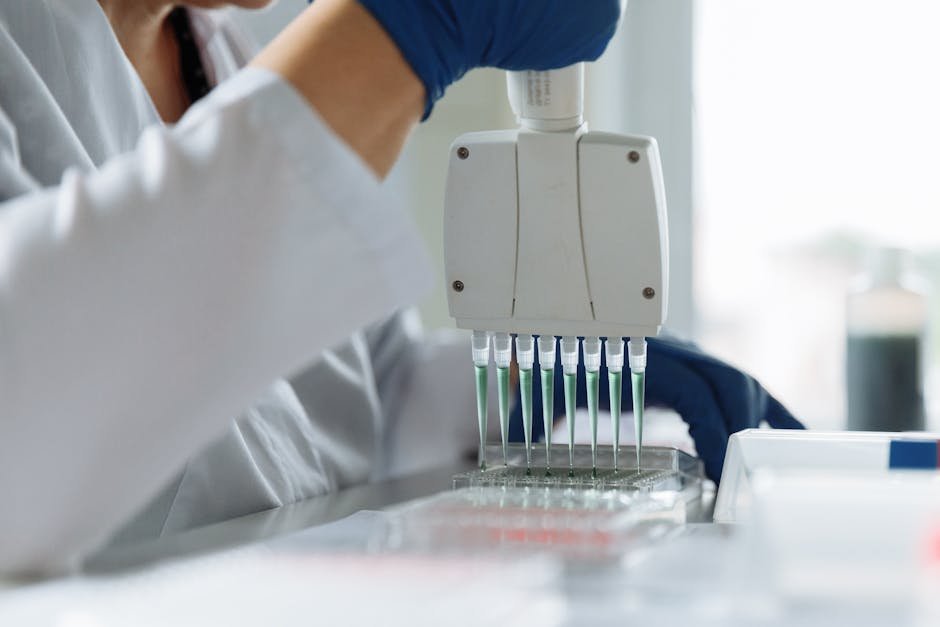
So, how do you whip up a 67-million-year-old protein? Pure synthetic biology, that's how. We read the ancient DNA bits. Plus, we cook up exact copies right there in the lab. Then, we jam these codes straight into modern bacteria. Little factories, they become. Just churning out those ancient proteins for us. Like firing up protein production lines from the Mesozoic Era.

California team in 2019? Knocked it out of the park. They reproduced enzymes from a 50-million-year-old extinct bacterium. This ancient microbe thrived in scorching 150-degree Celsius thermal springs. Hot stuff. Temperatures modern bacteria wouldn't even survive. They brought back an enzyme called thioredoxin. And it worked. Performance perfect. In a modern lab setting. But this wasn't just a neat trick. It proved we could read, synthesize, and actually *use* ancient DNA to create ancient proteins that truly worked. Imagine the muscle proteins of Sue. Or the fur proteins of woolly mammoths. Even the photosynthesis proteins of plants long gone. We're right on the edge of figuring out how these creatures moved. How they hunted. Maybe even thought. All the way down to a molecular level.

## Reanimating Molecules: More Than Just Dino Clones

Harvard geneticist George Church and his crew got going in 2015. Their plan? Mix mammoth DNA with modern elephant DNA. The goal? Reintroduce specific traits. Like cold-resistant fur, for today's elephants. So not about perfectly bringing back an entire species. More about choosing useful stuff, like super-warm fur. A powerful use for old-school biology.

## Forget De-Extinction Fantasies (Here's the Real Deal)

Can we actually bring back a T-Rex, like in the movies? Honestly, no. Not a complete, roaring, flesh-and-blood T-Rex. Because the DNA we dig up from fossils? Super fragmented. Damaged, too. Think of it: a few hundred puzzle pieces from a million-piece jigsaw. Most of them broken. We can rebuild individual proteins, sure. Maybe even understand how ancient muscle tissue *really* worked. But a whole T-Rex? Not happening.

Dr. Malcolm, that guy in *Jurassic Park*, totally nailed it: we spent so much time asking if we *could* that we forgot to ask if we *should*. So, turns out, the real goal of this molecular archaeology gig? Not letting dinosaurs run wild in some California theme park. It's way more practical.

## Making Our Health Future-Proof

Old proteins? Huge possibilities. A lot of modern bacteria have gotten super resistant to antibiotics. But ancient bacteria? When you look at their proteins, they often haven't developed that resistance. Digging into these could unlock totally new antibiotics, real game-changers for our fight against superbugs. Even the 1918 Spanish Flu pandemic offers clues. Analyzing its viral proteins has taught us big stuff about how flu viruses change, helping us prep for future outbreaks. And those ancient viruses found thawed in Siberian permafrost, surviving for ages? Their proteins might just have something crucial for developing stronger medicines and vaccines that actually last longer.

## Nature's Old Answers for Our New Problems

The surprises just keep on coming. A Princeton lab, just in 2023, looked at proteins from a 150-million-year-old marine creature. What they found? Mind-blowing. These proteins could fight off ocean acidification. Big deal. That's a huge problem for marine life today. Turns out, nature already had fixes for stuff we're only now getting our heads around.

Every fossil. Every fragment of *Ancient DNA*. Every protein we manage to bring back. Not just dusty relics. These are keys to our future, folks. Unlocking treatments. Making tough crops. And maybe even helping us adjust to a changing planet. There's a whole world of ancient solutions waiting to be found. Possibly even more secrets hiding deep in Sue's massive bones.

## Common Questions, Answered

### Q: How long does DNA last in fossils?
A: Scientists have pulled proteins, like collagen, from T-Rex relatives. Sixty-seven million years old, some of 'em. So that's super long for molecular info, when the conditions are just right.

### Q: So, how do they decode ancient DNA?
A: It involves stuff like Next Generation Sequencing. That really blows up those tiny, fragmented DNA bits. And AI tools like AlphaFold helping. They kind of guess the 3D shapes of proteins, based on that DNA info.

### Q: Can they really bring back extinct animals, like a T-Rex?
A: Look, we can recreate single proteins, yeah. And check out old traits. But a whole T-Rex, a super complex creature, from ancient DNA fragments? Not happening right now. The DNA is just way too busted and incomplete.
Lifestyle
Unlocking the Past: How Ancient DNA is Revolutionizing Science
February 16, 2026