That Solitary Sun: What’s the Deal with Our Star Being All Alone?
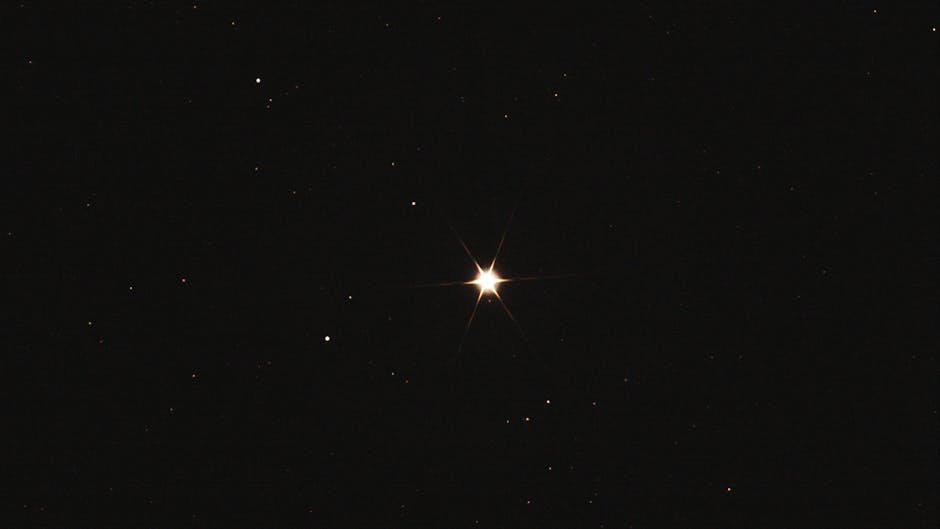
You ever just stare up at that big, bright thing in the sky? What’s its deal, right? Our Sun, holding down our corner of the galaxy, pretty common but yeah, also totally unique. And it’s chill, keeps us alive here on Earth. But something’s really weird: it’s a Solitary Sun. Most other stars outta there? They got friends. Company! So, why’s ours just, you know, flying solo?
Our Star: Totally Average. Mostly
Our Sun? A G2V-class star. In space talk? That just means it’s super common. Average stuff. Like, 74% hydrogen. Mostly that. Good chunk of helium too. Other things make up the rest. Size. Makeup. How much energy it kicks out. All pretty standard. Nothing crazy. And the universe is just full of stars just like our own.
But Most Stars? Not Alone. Seriously
Okay, this is where it gets good. Because our Sun, like we said, is so boring in its design? Its “single” status, though, is anything but. Most star systems out there? Not just one star. Nope. Often multiple. Like, binary ones. Or triples. Can even be systems with six or nine stars! Alpha Centauri, our closest neighbor, for example. People thought it was one star for ages. Then two. It’s actually a triple-star setup. So yeah. Why is our big, bright Sun all by itself? This weirdness started really bugging scientists in the 90s. And they came up with wild stuff.
That Whole “Hidden Dwarf” Story? Nah
So, one idea, good for the conspiracy crowd, says our Sun is totally not alone. They figure a smaller dwarf star is locked right behind ours. Always hidden from Earth’s eyes. Kinda like the Moon’s far side, always facing away from us. Sounds cool, doesn’t it?
But astronomers? They’re totally not buying it. Because we don’t just watch the Sun from Earth. We got satellites and probes all over the solar system. They would spot that companion. And another thing: if a hidden star truly orbited there, its gravity would make the Sun wobble. Really subtle shakes in its core, in how it moves. And those? Just not happening. So this idea? Gets dumped. Fast. Like yesterday’s pizza box.
Black Hole in the Kuiper Belt? Nope
Also, remember that black hole theory? Some folks thought one was chilling out in the icy, rocky Kuiper Belt, way past Neptune. They said maybe it was even a companion star way back when. Blew up forever ago. Influenced comets. Maybe even ‘Planet Nine’. For a bit in the 90s, this kinda sounded believable. Because, you know, we just didn’t get black holes back then.
But today? Nope. Not even close. A black hole forming would mean some super-gigantic star exploded right here. Blew up everything. Including our young Sun. Toast. And more importantly? We now know black holes aren’t just these invisible, all-sucking vacuums people used to think. When they eat stuff, they make a ton of friction, mega heat, and light in their disks. If a black hole was out in the Kuiper Belt, which is packed with trillions of icy things, it would have a huge, bright ring of light around it. You’d see it. With your own eyes, even. Forget telescopes. So, no dark buddies chilling out there.
Maybe a Failed Star Sibling? The Sun’s Almost-Twin
Okay, this one? A little more realistic. It says our Sun should have had a buddy. A twin that never quite made it. The idea is that super early on, when our system was forming, there was other gas just hanging around. A “brown dwarf.” Never got big or dense enough to actually light itself up. Too heavy to be a planet, not hot enough to be a star. Basically, a star that failed.
And computer models? Math stuff? They actually kinda back this up. Our system initially seemed built to be a two-star setup. But our Sun? It grew up faster. Gobbled a bunch of the available hydrogen. And that left the would-be sibling without enough fuel to get its own fusion engine going. Guess what? A lot of that “lost” stuff might not be gone at all. It could be the gas giants we see now – Jupiter, Saturn, Uranus, and Neptune. If that brown dwarf had just snagged a little more hydrogen, we’d have a smaller, active dwarf star zipping around our Sun. Probably no huge planets. But yeah, other research says nope to this whole idea. So, still a big argument for space scientists.
The Real Answer, Probably: Just Born Alone
So yeah, after all that cosmic guess-work and insane theories? The simplest, most logical explanation is usually right. Our Sun was just born a single star. Sure, lots of stars have partners, but solo stars? Not weird. Plenty of others out there are flying solo too.
No hidden family drama here. No dark secrets. No ancient sad story. Our solar system started with one star. And one star it’ll stay. Until it dies someday. And those giant gas planets past Mars? Just leftover stuff from when our star system came together. Not some ghost sibling’s bits and pieces. It just shows how many different ways stars can form.
We’ll probably never get those awesome Tatooine-style double sunsets here, sadly. But the universe is enormous. Other systems out there? Got two, three, even six suns! Giving a crazy night show of light and dark. Just like in old sci-fi books, like Isaac Asimov’s “Nightfall.”
Quick Questions Answered
Is our Sun actually “average”?
Yup. Its type (G2V), how big it is, what it’s made of (lots of hydrogen, some helium), and how much energy it puts out. All pretty standard for a star.
Most stars: Lone wolves or in groups?
Most stars out there? In groups. A lot are binaries (meaning two stars). But you also get triples or even bigger bunches. Our Sun being all by itself is kinda unusual.
Did the Sun have a black hole buddy?
That idea? No. Used to be popular, but scientists say nope these days. For a black hole to pop up, a massive star would’ve had to blow itself to smithereens. Probably taking our whole solar system with it. And guess what? Black holes aren’t totally dark. They blast out loads of radiation when they suck in stuff. So we’d see it if there was one close by.