The Mystery of Planet Vulcan: The Planet That Never Was
Ever think there’s something missing out there in space? Y’know, a piece of our solar system’s puzzle? Something just… beyond sight? No one really believes it now. Sounds like crazy sci-fi, or a super wild conspiracy, right? But for years – decades – scientists were sure. A whole other planet. They called it Planet Vulcan. Its story? A total trip through how science changes.
Why Was Planet Vulcan Even a Thing in the 1800s?
Big science, like, really took off in the 1800s. People were getting serious about understanding space. Figuring out how planets twirled around the Sun. And mostly, they relied on Isaac Newton. His mechanics. Like gravity and all that. Total scientific gospel back then. His rules explained everything – apples falling, planets circling. Most planets stuck to his script. Predictable paths.
But then there was Mercury. That little planet closest to the Sun? It just always seemed to be off. Orbitally. Calculations were always a bit short. Tiny, but consistent, deviations bugged everyone. They just didn’t fit Newton’s equations. Everyone was baffled. Messed-up math? Was that it? No way. Nobody would ever question Newton.
Urbain Le Verrier Had a Hunch in 1846
So, along comes Urbain Le Verrier. A French astronomer. Total genius. He’d already nailed Neptune’s orbit, predicted it perfectly. So, when he started checking out Mercury in 1842? People listened. He spotted the same weird, annoying orbital quirks. Crunched numbers like a madman. Pulled in every known planet’s gravity. Still. Those darn deviations. They just wouldn’t quit.
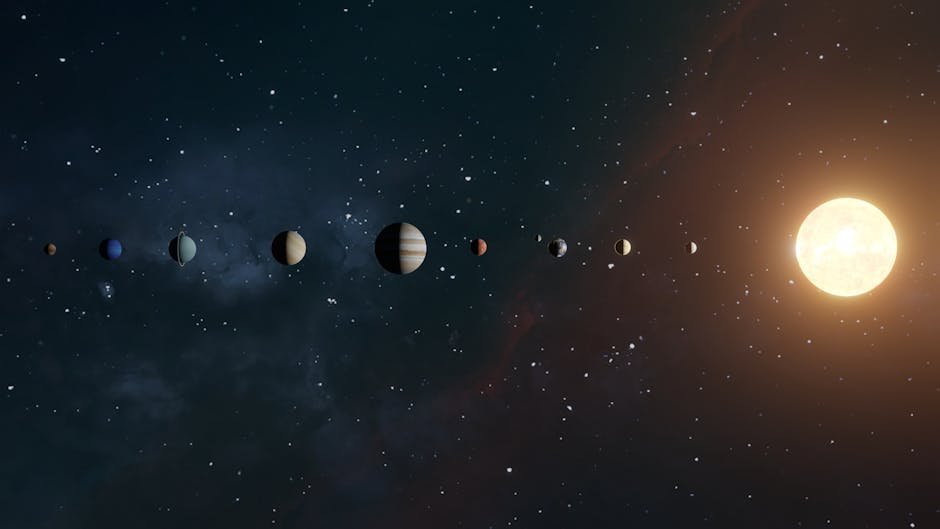
In 1846, Le Verrier hit on a wild thought. A paper was published. He said Mercury just couldn’t be the closest planet. Had to be something else. Yanking on Mercury, throwing its path off. He put forward this idea of a new, smaller planet. Orbiting right there, between Mercury and our Sun. About 24 to 26 million kilometers from the star. Named it Vulcan. Like the Roman god of fire. Made sense, being so close to that fiery Sun. And, another thing: once you plugged Vulcan into the equations? Bam. Mercury’s orbit finally made perfect Newtonian sense. Other smart folks double-checked his math. Yep. Mathematically, a hidden planet was the solution.
Search Party for Vulcan? Nothing
Math was spot-on. True. But here’s the kicker: nobody could actually see it. Not a single person. For roughly 70 years, astronomers globally searched. Some even claimed sightings. Snapped pics! But, plot twist. Usually it was just Mercury itself. Or, come on, people just wanted attention, right? Flimsy proof. So, the elusive Planet Vulcan? Just stayed unseen. That’s it.
After decades? Still nothing. No sightings. Theories started flying. Maybe it was too tiny. Too dark. Hidden by the Sun’s crazy glare. Or perhaps it was literally zooming around the Sun too fast for any telescope. Impossible speed. And another thing: some believed it had just melted, turned into dust. Still had enough gravity to mess with Mercury, though. Plenty of guesses for why it was invisible. But questioning Newton? No chance.
Einstein Blew It All Up in 1916
Then, boom. 1916. Everything shifted. Albert Einstein. He came out with his big idea: general relativity. Totally changed the game. Tore up the old rulebook. Einstein proved you didn’t need some ghost planet between the Sun and Mercury. The problem wasn’t a hidden object bumping Mercury around. No. It was the Sun. Its pure, intense gravity.
Spacetime Curvature Explains It All
Imagine huge stuff, like the Sun, as massive bowling balls. Dropped onto a big, stretched-out rubber sheet. They make a ‘dent.’ Now, planets? They’re like marbles. They don’t just go straight around the Sun. Nah. They roll along the curved fabric of spacetime. That ‘dent.’ Mercury, being super close, got stuck in the deepest part of that cosmic dip. So its weird shifts weren’t from some hidden pull. But because it was moving inside the Sun’s seriously warped spacetime! Newton’s stuff totally worked for Earth. Smaller bits. But out in the big, cosmic leagues? Einstein’s view won. People were skeptical at first. Duh. But with more observations. Super precise math. Einstein kept proving he was right. Over and over.
Why Science Changes: The Vulcan Lesson
Once Einstein’s relativity sorted out the universe? The hunt for Planet Vulcan just kinda died down after 1916. What’s the point of looking for something that just didn’t need to be there anymore? Even with telescopes getting seriously better over the years, no Vulcan. Nothing remotely like it. Today, our tech can find planets light-years off. And we still got zero evidence – nothing you can see, no math for it, no physical proof – of a hidden planet chilling between Mercury and the Sun.
So yeah, the whole Planet Vulcan thing. No planet, but a wild, unexpected story for science history. Really shows how science moves forward. And it proves you always gotta question what you think you know.
Other Planets? Yeah, Plenty of Hypothetical Ones
Vulcan wasn’t the only ‘maybe planet.’ Folks have always thrown out ideas for unseen worlds. To explain weird stuff. Or just fill in the cosmic blanks. We gotta map out every bit of our solar system. Find every tiny gravitational whisper. It’s just what we do. Part of that forever-exploring vibe that makes scientists – and, well, everyone – keep looking up.
Got Questions?
Q: Why was Planet Vulcan proposed in the first place?
A: Back in the 19th century, they thought Planet Vulcan was needed to explain Mercury’s weird orbital wobbles. Newton’s laws? Known planets’ gravity? Didn’t add up.
Q: Who first proposed the existence of Planet Vulcan?
A: French astronomer Urbain Le Verrier. He was the guy. Came up with the idea for Planet Vulcan in 1846. Also called Neptune’s shot, by the way.
Q: What ultimately explained Mercury’s orbital anomalies without the need for Planet Vulcan?
A: Albert Einstein. His general relativity theory in 1916. It showed that big stuff, like the Sun, actually warps space. And Mercury just follows that bend, its path isn’t messed up by a ghost planet. No, it’s the Sun’s gravity in weird spacetime.