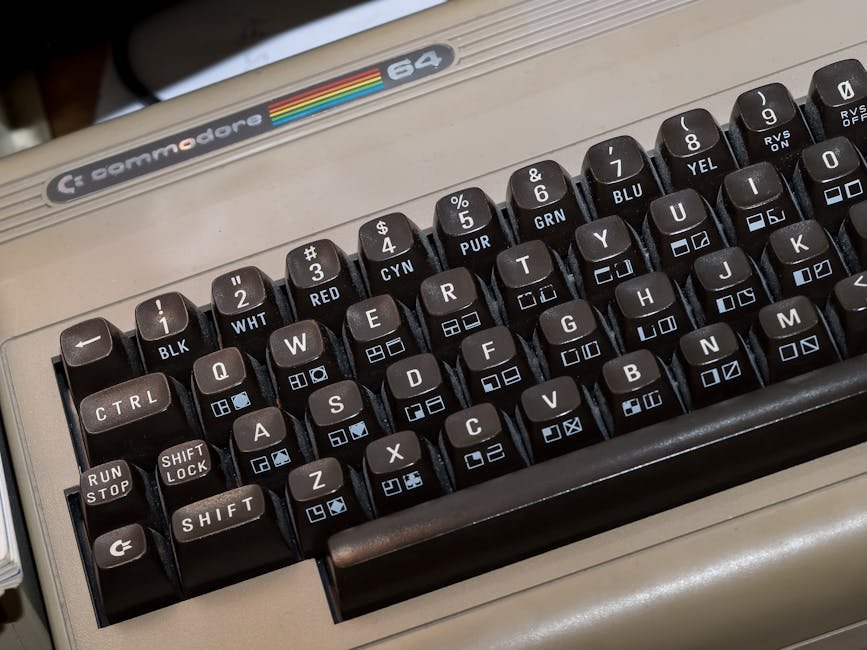
The Commodore 64 Story: How Jack Tramiel Changed Home Computing
Who really put computers in every home? Long before Silicon Valley got all famous, you know? Before these fancy laptops, even before smartphones, there was this machine. It brought digital magic to regular folks. And behind it? A guy whose life story makes even today’s tech moguls look boring. Seriously. We’re talking about the Commodore 64. A real legend, that thing. And the brains? Jack Tramiel. This little box totally changed home computing. Forever.
Jack Tramiel’s Crazy Story: From Auschwitz Survivor to Tech Mogul
So, Jack Tramiel. Born Polish, 1928. Jewish kid. Then World War II crashed his whole early life. Auschwitz. That’s where they sent him and his family. Horrible place. He went through hell there. Lost his mom. Lost his brother. And his dad? Even worse. Josef Mengele, that monster. Reportedly injected him with diesel fuel for some wild dehydration experiments. Gross.
He survived. Just him. Got free, came to America. Started from absolutely nothing. Taxi driver. Waiter. Whatever paid the bills, he did it. By 1951? Boom, typewriter repair shop. Kinda small beginning. But things spun up fast.
But he wasn’t staying small forever. Wanted to make his own typewriters. 1953. He started Commodore. First, he thought “General Business Machines.” But “General” and “Admiral” were already huge. So he picked “Commodore.” Sounded strong. Naval rank, you know? Smart move, too.
Jack? Sharp AF. Right from the start. Cold War messed with Czechoslovakian stuff. So, 1954, he set up shop in Canada. From Canada, he just slapped the Commodore label on European typewriters. And another thing: totally bypassed U.S. import laws. Genius, honestly. Look, this guy just got things done.
Commodore’s Evolution: From Typewriters to Calculators and Beyond
Six years. 1954 to 1960. Commodore? All typewriters, all the time. But Jack always watched things. 1960, they jumped into mechanical calculators. Good money. Total shift for the company.
Then the digital age hit. By 1970, guess what? Commodore was cranking out awesome digital calculators. Jack was riding high. Until 1975. Texas Instruments, their chip guys, suddenly stopped selling them parts. Started making their own calculators to compete. Classic.
A true Tramiel moment. So, instead of folding? He bought MOS Technology. They had that killer 6502 8-bit chip, you know? This buy secured their chip supply. Also, huge advantage in price. And performance. Big deal. But the MOS engineers? They wanted bigger stuff. Computers.
The Costly Bet: Bill Gates Sells BASIC to Commodore
Those engineers eventually talked Jack into making computers. One big problem though: no standard OS in the 70s. None. Every machine needed its own.
Then, knock, knock. Microsoft. Right at Commodore’s door. They were selling a simple BASIC OS. Perfect for the 6502 chip. Gates? Nah, he wasn’t impressed. Told his engineer, “Just get rid of it. Need the cash.” Didn’t see a future, huh?
But Jack? He saw something. Refused the $3 per-unit fee from Gates. No way. Go big or go home. His motto. He demanded total ownership of BASIC. Right now. Or he’d find a different deal. Somebody else. Gates, thinking Commodore would soon vanish or eventually need super-fancy software, took the bait. Big mistake.
Just fifteen grand. $15,000! Commodore got full, forever rights to Microsoft BASIC. And guess what? One of Gates’ biggest regrets. Period. They kept that basic BASIC running into the mid-90s. And another thing: Gates was reportedly fuming. Like, “tricked” fuming. Every single time the Commodore 64 got brought up. Ha!
The Commodore 64: A Revolution in Home Computing
Commodore’s first computer, the PET? Yeah, did okay. But not the big deal Jack wanted. He told his engineers, straight up: “Make me a computer. Simple. Cheap. Everyone buys it.”
So, 1980, out came the VIC-20. Small box. No monitor. Plugged right into your TV. Only $299. Sold like hotcakes. Even had Captain Kirk, William Shatner himself, shilling for it in ads. Pretty clever, right? Made people feel good about it. But the real game-changer? Two more years.
August 1982. Jack Tramiel, Commodore. They blew up the whole industry. With the legendary Commodore 64. Price? Crazy. $595. And get this: competitors were selling less for a grand, even two grand. Like 70% cheaper. More bang for your buck, hands down. It sold like crazy, too.
Jack’s sales plan? Total genius. Giant ad push. TV. Billboards. Radio. Newspapers. Everywhere. But the real genius move? How he got it out there. No fancy computer stores for this thing. Nope. Sold everywhere. Even the supermarket. Picking up a computer with your milk. Wild. And his pricing? Backwards, in a good way. Sales went up. Popularity grew. And another thing: he slashed the price. Down from $550 to $250! Can you believe it? Instant mass adoption. Faster than anyone ever thought possible.
Impact? Huge. Seriously, 40 million Commodore 64s worldwide. Just vanished off shelves. Made a massive world of games. And software. Not just games, either. Nah. C64 had this awesome sound chip. Music producers loved it. In the 80s and 90s, big for artists, even pop stars in Turkey used it. Commodore wrecked the competition. Drove giants like Texas Instruments right out of the computer game. Gone.
Tramiel’s Turbulent Departure and Atari Acquisition
Commodore was winning big publicly. But inside? Total mess. Jack? Yeah, real tough boss. Everyone said so. Some folks think he had bipolar disorder. You know, huge mood swings. Yelling. Even got physical with employees. Intense.
So, his wild leadership. Lots of good people left. The actual smart folks, the core engineers behind the Commodore 64, they walked. 1982. Started Ensoniq. By ’84, Jack was basically hated. In his own company. The board? Had enough. Kicked him out. The founder. Wild. Commodore kept going, sure. But without him? Their luck ran out. Mid-90s, gone.
Atari’s New Dawn: Tramiel’s Second Act
Mad as hell. Hell-bent on payback. Jack wasted zero time. Same year, 1984. He bought Atari. One of Commodore’s biggest enemies. This time? Different approach to leading. Maybe. Humbled? Wiser? Who knows. But he ran Atari straighter. Steady hand stuff.
Second act? Also a hit. Jack at the helm, Atari exploded through the late 80s, early 90s. Great gaming consoles. Good pro gear. Lots of stuff. He made sure the games were killer. Helped companies like Activision — yeah, that Activision, Call of Duty fame — get big. Check old Atari games. Activision’s name. Still there.
Jack stuck with it until 1995. But then, tragedy. His son. Heart attack. Sudden. That personal hit? Shattered him. Retired from business. Sold Atari, 1996. Spent his last years doing history stuff. And giving back, big time. Especially for Holocaust studies. And victims. Important work.
Passed in 2012, 83 years old. What a legacy. Holocaust survivor. Beat all the odds. Became this pioneer. Put computers in everyone’s home. Kicked off the golden age of video games. Amazing.
Frequently Asked Questions
Q: What was Jack Tramiel’s personal background?
A: Jack Tramiel. Born Poland, 1928, Jewish. Auschwitz survivor from WWII. Lost pretty much his whole immediate family there. Brutal.
Q: How did the Commodore 64 become so popular?
A: Okay, the Commodore 64 got HUGE because of its crazy price point ($595 when others were $1000-$2000). Also, ads everywhere. And another thing: sold it in regular stores. Supermarkets! Even dropped the price more as sales soared. Everybody had one.
Q: Did the Commodore 64 only impact gaming?
A: Nah, not just gaming. Nope. The Commodore 64 was also a big deal in music. Its awesome sound chip? Total must-have for producers and arrangers. Made tons of pop songs in the 80s and 90s. Seriously.