Stargazing California: Catching Cosmic Vibes
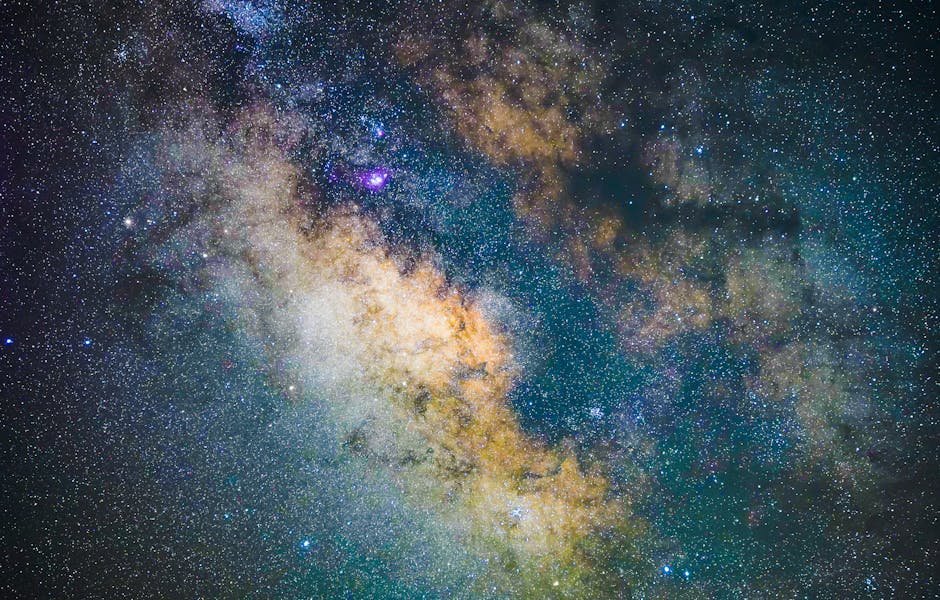
You ever just crane your neck on a clear night? Maybe out there in the desert, up in the Sierra? And really wonder what’s beyond? The cosmos. It’s a wild, incredible mess, honestly. And lucky us, right here under the sprawling skies of Stargazing California, we’ve got a killer view of some seriously mind-bending science. But before you pick your next chill spot to watch the Perseids, let’s quickly chat about the invisible stuff protecting our blue marble, and the unbelievable missions we’re sending way out there.
Artemis: New Moon Days!
November 16, 2022. You remember that date? Kicked off a whole new chapter for space exploration: Artemis. The SLS, most powerful rocket ever built— yeah, that one—and its Orion capsule, blasted off. This wasn’t just another send-off. It was the return to the Moon. Official.
That Orion capsule? It had sixteen cameras. Inside, outside. Zapped back images of Earth as it journeyed. It zipped right out of Earth’s cozy protective zone and into the Moon’s gravity. Got pretty close. This spacecraft is set to make a record-breaking pass, going as far as 64,000 kilometers from the Moon before heading home. Compare that to the Apollo missions back in ’69. They hugged the Moon way tighter. That trip took Apollo astronauts just over two days. New Horizons, a speed demon, got there in roughly eight hours. But Orion? It’s taking a cool 25.5 days. Why? To test its parts longer. More thoroughly. Less fuel. Sometimes, going slow is the genius move.
Earth’s Secret Shield: The Magnetosphere
Think about turning on your faucet. That shape the water makes? A much, much bigger version of that—like a giant invisible bubble—is wrapped around Earth. This is our magnetosphere. Our planet’s magnetic field inflates it. It’s super important. Without it, life as we know it? Probably gone.
This magnetic thing crushes and stretches crazy energetic solar particles. Protects everything down here. And another thing: a whole bunch of satellites constantly orbit, watching solar activity. Seeing how it messes with our atmosphere. Because those Sun events aren’t just pretty light shows. They can seriously endanger astronauts. And they mess with communication systems and power grids worldwide. Good thing we’ve got that invisible shield, huh?
The Heliosphere: Our Solar System’s Force Field
Just like Earth, the Sun’s got its own giant bubble. The heliosphere. Solar winds inflate it, constantly blasting particles out into space, soaking the planets. This huge bubble shields our whole solar system from the harsh, destructive junk of interstellar space as we cruise through the Milky Way.
Fifty years ago? Had no idea this thing was even real. So, thanks to dozens of spacecraft we’ve watched, we’ve mapped it. Measured it. We’re literally riding inside something that expands and contracts every 11 years with the solar cycles. It’s breathing! Next time you spot a brilliant star from some remote California peak, remember you’re looking out from inside this awesome, breathing shield.
Cosmic Roller Coasters: Gravity Tricks
Ever ridden a roller coaster? It slows down uphill, speeds up downhill. Spacecraft do the same thing, using gravity. Scientists plan their paths to use these cosmic slingshots.
Take NASA’s Stereo spacecraft: they used the Moon’s pull to whip themselves into position for a crucial move. Plus, orbits aren’t all the same. Some satellites spin in tight, bubble-like paths. Others have varied, special routes. For instance, ESA’s Cluster spacecraft ride high elliptical paths. Japan’s Geotail just hangs out, orbiting on its own. It’s all about smart use of celestial mechanics.
Lagrangian Points: Chill Parking Spots in Space
Imagine parking spots in space. You just… stay. That’s what Lagrangian points are. These are places where gravity from two big space things (like Earth and the Sun) balances out. You stop.
At L1, the balance is just right for observatories like SOHO, ACE, and Wind. They can orbit there forever, watching Earth or the Sun. L2, another famous spot, hosts the James Webb Space Telescope – you know, the one that sent us those mind-blowing first photos this past summer. Webb, plus WMAP, Herschel, and Planck, chills at L2. Constantly feeding us deep data. Proof that sometimes, the best view comes from a stable, well-chosen spot.
Voyager 1 & 2: Humanity’s Deep Space Legends
Back in 1977, two of humanity’s best explorers blasted off: Voyager 1 and 2. With a gravity boost from Saturn and Pluto, these craft started epic journeys. As of 2022, they’re still going. Furthest objects we’ve ever launched into the cosmos. Really!
They’re like time capsules. Drifting out from our little blue bubble into the huge ocean of space. But also, they’re checking out the very edges of the Sun’s heliosphere. Sending back data from beyond our solar system’s protective zone. Pretty wild, right?
Crafting Space Journeys: Not Just About Speed
You might think faster is always better in space. Nope. Sometimes, going slower, or in a specific orbit, is way more helpful for scientists. Newer missions, like Orion’s extended 25.5-day journey, put system testing over raw speed. All while saving precious fuel.
Engineers carefully figure out these best routes. Balancing fuel, mission goals, and the need for intense testing. It’s a delicate dance! Making sure our spacecraft not just get there, but do their important work for as long as possible.
So, next time you’re out there, telescope pointed upward somewhere in the California high desert, know that the universe isn’t just a static background. It’s busy. Moving. A breathing entity. Full of invisible forces and incredible journeys. Happy stargazing California—may your skies be super clear!
Got Questions?
How long does a Moon trip usually take?
Travel time to the Moon changes a lot, depends on the mission. Apollo missions in 1969 took around 2 days, 51 hours, and 49 minutes to get to lunar orbit. But faster probes like New Horizons zipped there in roughly 8 hours and 35 minutes. Newer missions, like the Artemis Orion capsule, might take longer—like 25.5 days. Because they need to do extensive in-space system testing with special fuel use.
What’s Earth’s magnetosphere?
Earth’s magnetosphere is a protective zone of space. Our planet’s magnetic field makes it. We often call it an “invisible bubble” around us. And it shields Earth and all life from bad, energetic particles from the Sun. Keeps them from hitting the surface.
What are Lagrangian points good for?
Lagrangian points are stable gravitational “parking spots” in space. This is where gravity from two big things (like Earth and the Sun) balances out. They’re perfect spots for space observatories that need to stay put for a long time. They save a lot of fuel! Famous ones? SOHO, ACE, and Wind observatories hang out at L1. And the James Webb Space Telescope (along with WMAP, Herschel, and Planck) is chilling at L2.