California’s WWII Story: Memorials & Unfinished Business
Could anything really prepare a nation for the utter chaos of World War II? A monster of a war. Claimed 70 million lives, just left wreckage and tank tracks scarring countries all over the globe. These shockwaves, they hit everywhere. Even chilled-out places in California WWII history got fundamentally changed, big time. Before the U.S. jumped in, yeah, folks were pretty anti-war here. But then came that one awful Sunday morning. Everything flipped.
California: The Pacific War’s Home Base. Seriously
Japan, a rising industrial big shot with some serious nationalistic pride, had been on this power trip for decades. Beat Russia in 1905, walked away from WWI looking like a champ. Thought they were unstoppable. So they rolled into Manchuria. Then fought brutal wars in China. Just awful stuff. And another thing: their aggressive push, especially into French Indo-China, freaked out regional players like Britain and the good old USA.
The U.S. saw trouble. So, we froze Japanese assets. Cut off their vital oil imports; Japan needed 88% of it! Japan felt cornered. Knew negotiations were just dead ends. Their big plan? Hit the US Pacific Fleet at Pearl Harbor. Hard. Suddenly. That would buy them time to set up a defense line, all the way from the Aleutian Islands down to Burma, and just build up their whole “Greater East Asia Common Prosperity Area.”
Wild plan. Very risky. Naval forces? Roughly comparable. But Japan had more aircraft carriers. Plus, they had experienced, jungle warfare-trained troops. Here’s the kicker: American intelligence had already cracked Japanese codes. Knew an attack was coming. But where?
Pearl Harbor. A quiet Sunday. December 7, 1941. Soldiers were chillin’, some at church, some flirting on the beach. Not ready. No torpedo nets out. Anti-aircraft guns unloaded. Ammo? Locked away. One green communications officer even blew off a radar warning of over 100 incoming planes. Said they were friendly B-17s. Disaster.
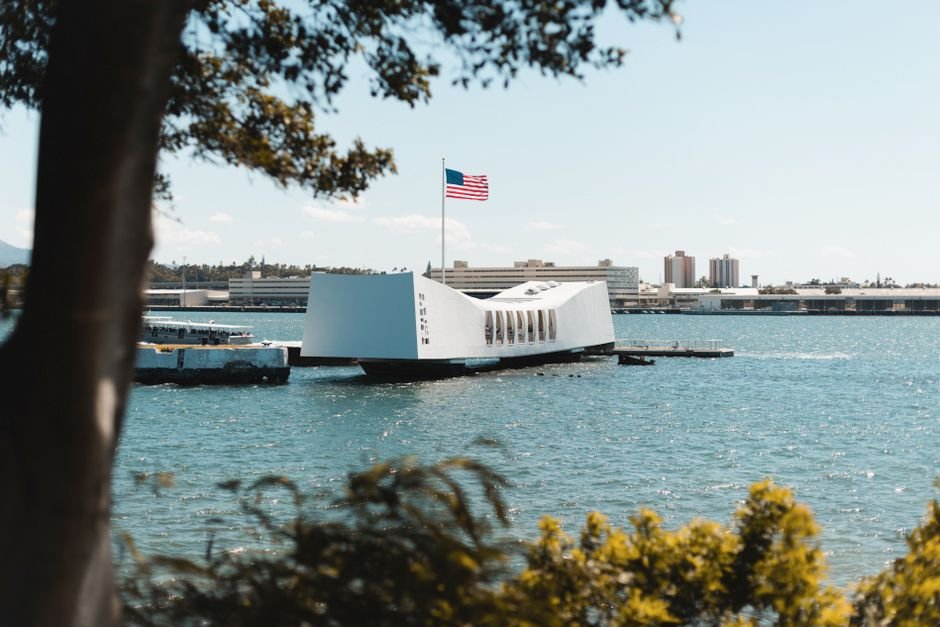
Japanese planes, 183 in the first wave alone, came screaming down. “Tora! Tora! Tora!” That signal meant the raid was a success, bombs away. Bombs and torpedoes just rained. Battleships like the USS California, Oklahoma, West Virginia, and Arizona got hit hard. Burning, sinking. Fast. In just 90 minutes, 2,403 Americans died. Another 1,178 injured. The whole US Pacific Fleet, caught flat-footed, was wrecked.
This sucker punch. It smashed American neutrality to bits. The “sleeping giant” woke up. Period. The public, who before hated war, suddenly just wanted payback. President Roosevelt, maybe not directly, now had his reason to jump into the fight. And just like that, the whole country mobilized. California, with its huge Pacific coastline, changed overnight. Became the main door for everything, the launchpad, the absolute nerve center for the gargantuan effort required to turn the tide in the Pacific War.
Check Out California’s WWII Spots: Museums, Memorials, History!
Pearl Harbor wasn’t just busted up ships and spilled oil. It was lives. Lives ended. Lives changed forever. All across California, you’ll find places that still carry that heavy feeling of remembrance. These spots? They’re not always directly about the Pearl Harbor attack itself, but they hold the collective memory and immense suffering that followed.
They whisper of the 2,403 lives lost that day. And the millions more whose destiny was sealed by the war Japan fired up. Visiting these sites helps you grasp the sheer human cost. And the grit that powered America’s answer. Right after the attacks, Californians scrambled. Building. Training. Getting ready for the giant job ahead. These locations help tell that story.
California’s Super Important Role: Coasts, Bases, Planes
Because the Pacific Fleet got crippled at Pearl Harbor, whatever was left – and what got rebuilt fast – that all found its home out here on the West Coast. California’s already-there naval bases, like down in San Diego and up in San Francisco, became key. For fixes. For getting ships ready. For sending them out. Total lifeline to the Pacific. A constant hum of busy-ness.
Japan had more carriers. Fighters like the Zero were awesome. American air power? Started kinda weak. But then it got big fast. California was a huge plane-making center, super important for fighting back against Japan in the air. Factories here just churned out the planes needed to challenge Japanese control of the skies. Coastal defenses became super important too. That attack, people just didn’t want any more chances taken on the mainland.
People’s Stories: How WWII Changed Cali
The shift in American public opinion after Pearl Harbor? Instant. Drastic. All those anti-war marches? Gone. Replaced by everyone just wanting revenge and to win. This national unity hit every house. Even in California. Every family felt the kick of the U.S. going into a global war.
Californians stepped up. Guys enlisted by the thousands, leaving everything behind. Women? They entered the workforce like never before, filling all those wartime production jobs. The kinds of people living here changed fast. The whole vibe. People relocated for defense work and military service. California’s diverse population, maybe once not caring so much about faraway fights, became a main engine in the war effort. Really fired up by that Pearl Harbor disaster.
Hit the Road: Your California WWII Adventure
Want to dive into this super important time? Because when the U.S. geared up for war, California’s role was just huge. Your travel plan can totally show this key slice of history. Start with understanding the absolute shock that hit the nation after Pearl Harbor. And then explore how this massive state became the launching pad for nearly everything that happened next in the Pacific.
Go find former naval yards. Some are parks now. Or museums, full of history. They used to be buzzing with war work. Consider hitting up local historical societies or specialized museums that keep the stories alive of people who helped with the war from the home front. From San Diego, a major naval city, all the way up to San Francisco, another really important port, you’ll uncover places where getting ready for war was just a daily thing. Each stop offers a special look into how California cranked into action when the sleeping giant awoke. Check out stories of local heroes and the big group effort that changed a state and helped us win.
Got Questions? Fast Answers:
When did Japan officially team up with the Axis powers?
September 1940. Japan signed the Tripartite Pact with Germany and Italy. Those three were the main crew of the Axis.
What was Japan’s big reason for attacking Pearl Harbor?
They wanted to wipe out the US Pacific Fleet with a surprise raid. That would buy time to take over China and grab vital stuff like oil, rubber, and tin. And build a tough defense line.
How many American lives were lost at Pearl Harbor?
2,403 Americans died that day. Another 1,178 were injured.