California’s Linguistic Roots: What the Heck is Up with Our Alphabet?
Ever stare at a letter, like “A,” and think, “Why that way?” Or “B?” Crazy, right? It’s not like some Roman dude, toga flapping, just woke up and invented the whole alphabet. Forget that. Thinking about the deep California linguistic history of where these everyday symbols came from? Kinda mind-blowing. And get this: It’s a hella long journey. Thousands of years and cultures later.
From Pictures to Sounds. Big Deal
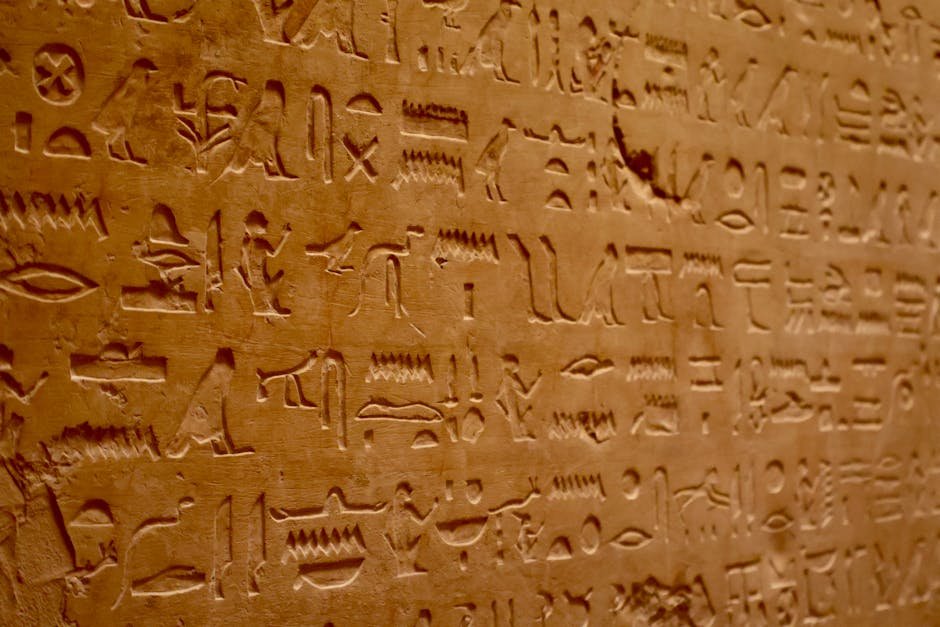
Picture it: Ancient Egypt. Four thousand years ago. No texts coming through. They’re carving hieroglyphs. Thousands of tiny pictures. Showing entire words or big ideas. Imagine learning all that! It was a closed club. Just for the rich. Or the powerful. Only they had the time, the cash, to master all those shapes. Because they controlled the info, plain and simple.
But then, some smart folks in the Sinai Peninsula had a eureka moment. Instead of a picture for every word? What if we did a shape for every sound? Genius. This cut thousands of symbols down to a mere 20 or 30. And this shift – from drawing whole scenes to simple sounds – was the dawn of the alphabet as we sorta know it.
Take “A.” Our friend. It wasn’t just a triangle and a crossbar. Not at all. It was an ox’s head. Upside down. Why an ox? Well, before dollar bills and Bitcoin, these animals were gold. Meat, milk, muscle power. The original wealth. Even today, a bull’s a symbol of financial punch on Wall Street. The history of our letters is tied to the most basic things about being human.
Phoenicians: Trade, Speed, and Consonants
So, after that initial spark, the Phoenicians popped up. Mediterranean coast. Hustling with trade, they were. They needed to write fast. And efficiently. So, they grabbed those early, still kinda drawing-like symbols. Streamlined them. Made ’em more stylized. Way faster to scrawl.
Their version? This “abjad” system. Total game-changer. Just consonants, mostly. Written right-to-left. Think of it as original shorthand. And it became the layout for later alphabets like Arabic and Hebrew. Sweet.
Consider “Z.” Started as “zayin,” meaning “axe.” First, the 7th letter. Resembling an “I” with tiny nails. But it slowly evolved. Those “nails” spread out. And somehow, it moved to the very end of our alphabet. Go figure.
Greeks: Vowels! And Stop Writing Backwards
Okay, then the Greeks came in. They took the Phoenician setup. Major glow-up time. Because they introduced vowels! Seriously. Before this, texts were like cryptic puzzles. Adding vowels made things clear. A whole new vibe for written chat.
Originally, the Greeks also wrote right-to-left. But humans are weird. They started writing both ways. Then landed on left-to-right. Why? More right-handers, apparently. This one small tweak? Made a huge difference. A standard we barely question anymore.
Their letters, like “alpha,” which came from Phoenician “Alef,” laid the whole groundwork. For today’s Latin and Cyrillic alphabets. Ever notice how some letters, like B or C, sometimes look backward in old texts? That’s just a leftover from those crazy, shifting directions.
From Oxen to Axes: Where Do Our Letters Really Come From?
It’s wild how much of our everyday writing still connects to ancient times. “A” is the ox head. “Z” is the axe. But it doesn’t stop there. “O” was an eye. “N” a snake. “M” came from ocean waves. Just three crests back then.
And “D?” It started as a triangle. Called “Dalet” by the Phoenicians. Meaning “door.” Our “B” comes from an old symbol for a house. Looking at the whole picture – houses, doors, fences (where “H” comes from!), axes, and the animals hanging out nearby – it’s super clear: Our alphabet is a quick look at the ancient world, showing off the stuff people cared about most.
And another thing: Even “G” has a story. It used to be basically “C.” But Romans needed a different sound. So they just added a dash to “C.” And, boom. “G” was born.
Roman Alphabet: What We Use. Boom
The journey just kept going. Those Greek letters made their way to Italy. Morphing into the Italic alphabet. Fast forward a few centuries. The Romans grabbed these letters. Cleaned them up. And settled on the Latin alphabet. This, folks, is the grandparent of what you’re reading right now.
Think about it. From an ox’s head drawn upside down in the dirt to the sleek “A” you tap on your phone? That’s a massive change. Thousands of years in the making. But even with all the tweaks, if you look super close, some shapes still hold hints of their old beginnings. That bull’s head? Still chilling in letter “A”.
Got Questions?
Q: So, where did the alphabet idea come from?
A: It started from making complicated Egyptian hieroglyphs simpler. People in the Sinai Peninsula decided to use symbols for sounds instead of whole words. Easy.
Q: What did the Phoenicians do to help the alphabet along?
A: They made early alphabets much faster. A practical, consonant-only “abjad” system. Right-to-left. Made trade way simpler. And it clicked for other alphabets later.
Q: How did the Ancient Greeks change the alphabet?
A: Big time. Two key things: they put vowels into it. And made everyone write left-to-right. Texts got way easier to read.